Victory for small (and honest) non-profits in the battle against the giant (and manipulative) coal industry!

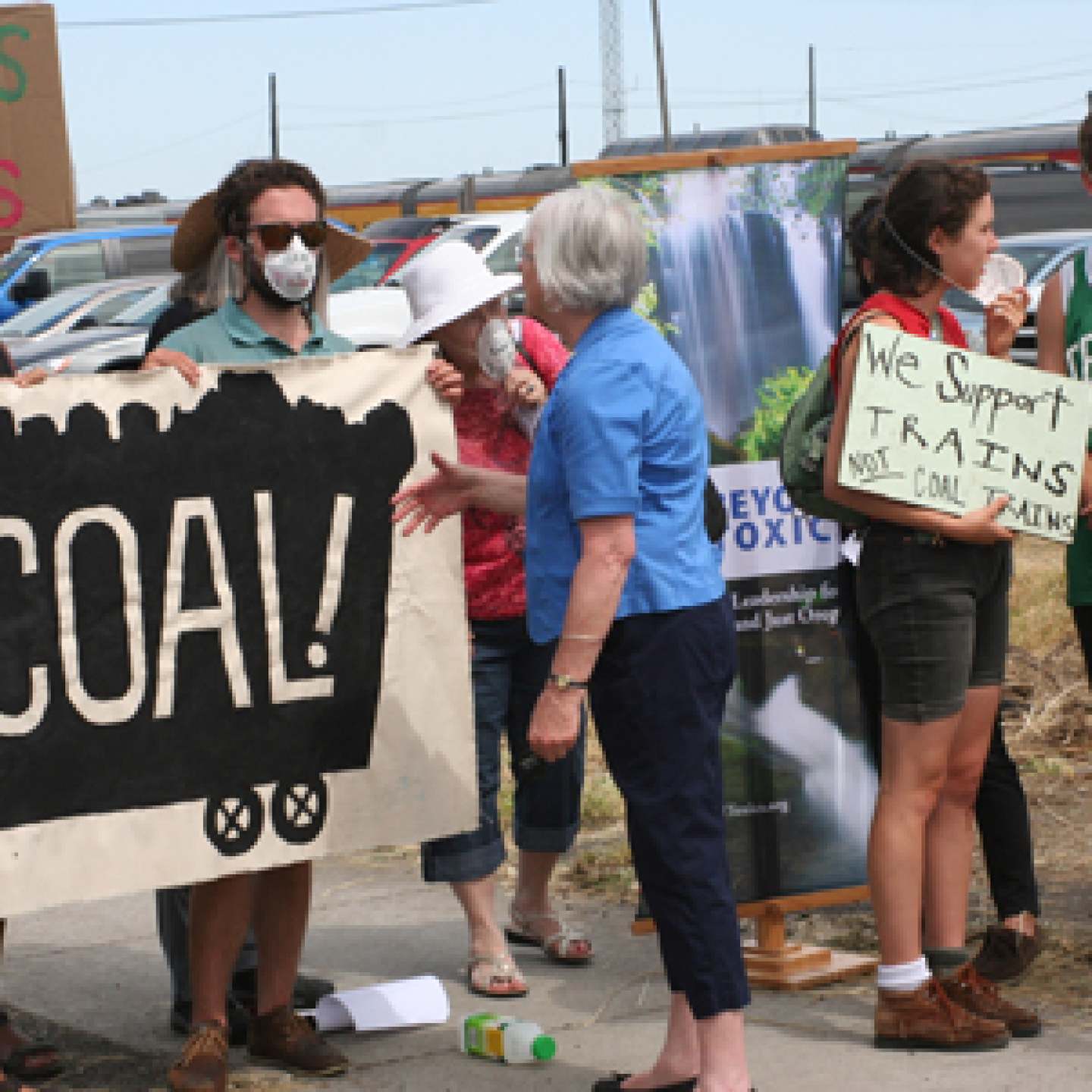
Beyond Toxics and No Coal Eugene talk to Mayor Piercy at Coal Protest

Beyond Toxics and No Coal Eugene talk to Mayor Piercy at Coal Protest

In spring of this year, Beyond Toxics submitted a Public Records Request to the Port of Coos Bay to learn the details of plans to haul coal through Eugene for export to nations in the Far East? Remember that they demanded $22,000 to get what should be public information? If that wasn’t enough, the Port of Coos Bay tacked on a long list of intrusive questions, demanding the disclosure of our members’ names and addresses.
This week, a Coos Bay judge ruled that non-profits like Beyond Toxics and Sierra Club do not have to obey the demands of the coal industry by turning over the names of our members! The Port of Coos Bay’s excessive inquisition of small non-profits was thrown out of court!

This important victory is just one step along the legal path to give the public all the facts about hauling dirty coal through the Columbia River Gorge, the Willamette Valley, and out to the coast via downtown Eugene. Both the Oregon Sierra Club and Beyond Toxics filed records requests and were answered with back-breaking fees and aggressive demands. Sierra Club filed a claim that there is a pattern and practice of subjecting public requesters to invasive questioning, and pointed out it had also happened to Beyond Toxics. Both groups are awaiting the outcome of the case to proceed with our public records request.

The Port has been and continues to be secretive and dismissive of public inquiries on coal exports. It is highly doubtful that the Port or their coal partners will release the requested documents before the Eugene City Council meets to vote on the issue on September 10.

In a new twist, on July 9, the Port of Coos Bay asked the Eugene City Council to approve a resolution they (or probably their lawyers) wrote, specifically stating “Be it resolved by the City of Eugene that The City strongly supports the use of the Coos Bay rail line for the movement of freight in western Lane, western Douglas and Coos counties…” and furthermore that “The City will work with the Port and other regional and transportation stakeholders to identify and recruit additional opportunities for the development of rail…”

Why should residents of Eugene support the dirty, destructive and polluting coal industry? Why should we agree to foul our air and poison our lungs, and destroy climates by burning more fossil fuels?

Do you want to stand up to Dirty Coal? Then join us in the Eugene Celebration Parade where we will march as King Coal and the Fossil Fools! We need a big group!  To sign up, send an email to info@BeyondToxics.org. Let’s show Big Dirty Coal where Eugene stands when it comes to envisioning a clean energy world!

-Thanks for standing with us,

Lisa Arkin, Executive Director


Stopping coal: A renewed moral imperative

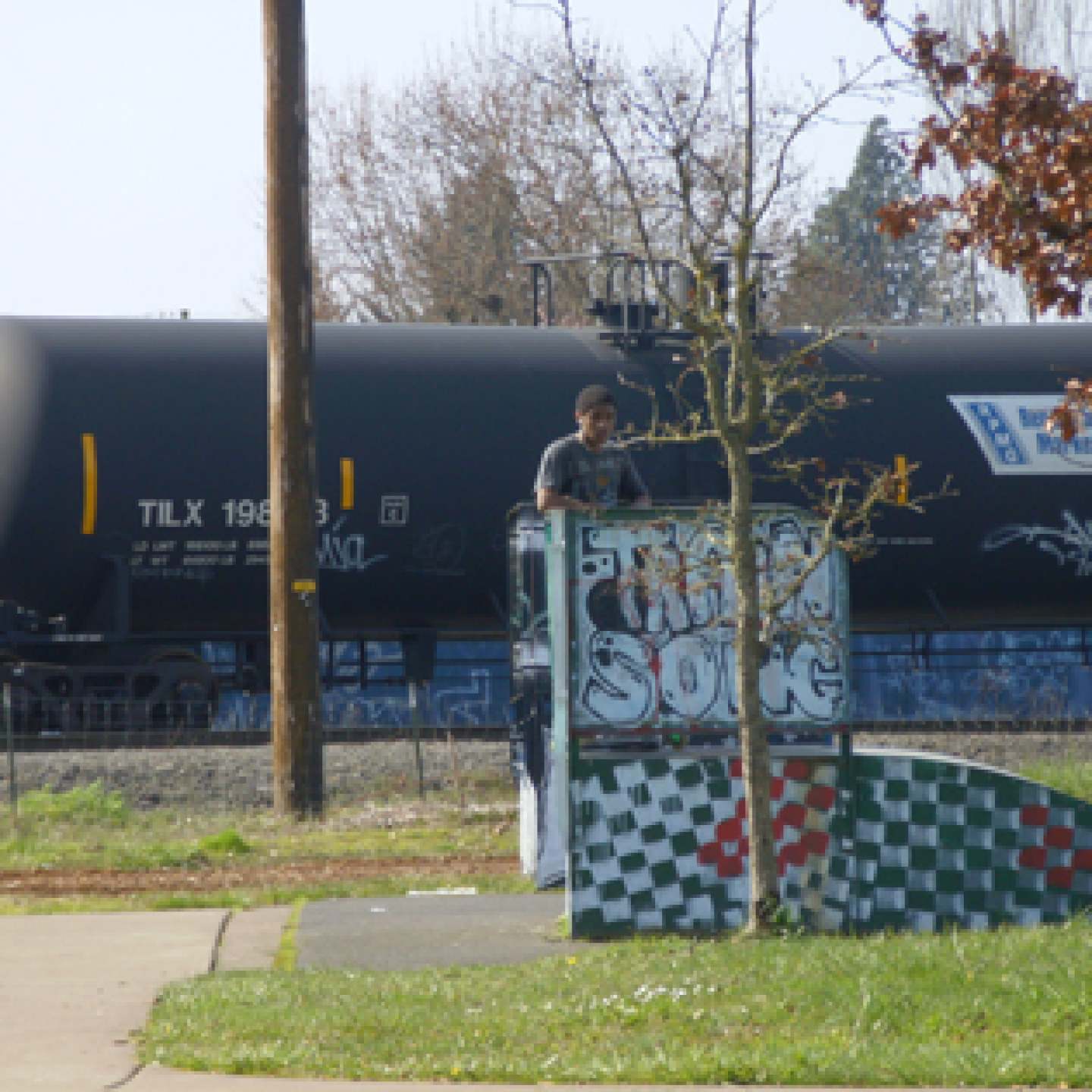
For children who live near the train yards, coal trains would be an added health risk burden

I want to be clear: I am not against trains (I often travel by passenger train)! I am, however, critical about using our rail system to haul coal to coastal ports and then load the coal and ship it off to Asian destinations. And justifiably so! Besides the significant safety issues posed by rail shipment of massive amounts of coal, we should consider the certainty of grave health problems we will have to address.
It is already true that health problems associated with polluted air occur in our community. Beyond Toxics has engaged with community health issues in the River Road, Trainsong and Bethel neighborhoods for many years. Recently we completed a community health survey in West Eugene. A striking pattern emerged. We found that 30% of the nearly 350 households we interviewed believe that at least one family member suffers from asthma. A 2006 study by State of Oregon did find a higher than expected number of lung cancers in this area. But more research needs to be done.

What do we know about the relationship between health hazards and the transportation of coal?

By the numbers
Let’s begin with words straight from a Burlington-Northern Santa Fe Rail Road research document they posted on their website. The document is called Coal Dust-Frequently Asked Questions and it addressed the question, How extensive is the coal dust problem?

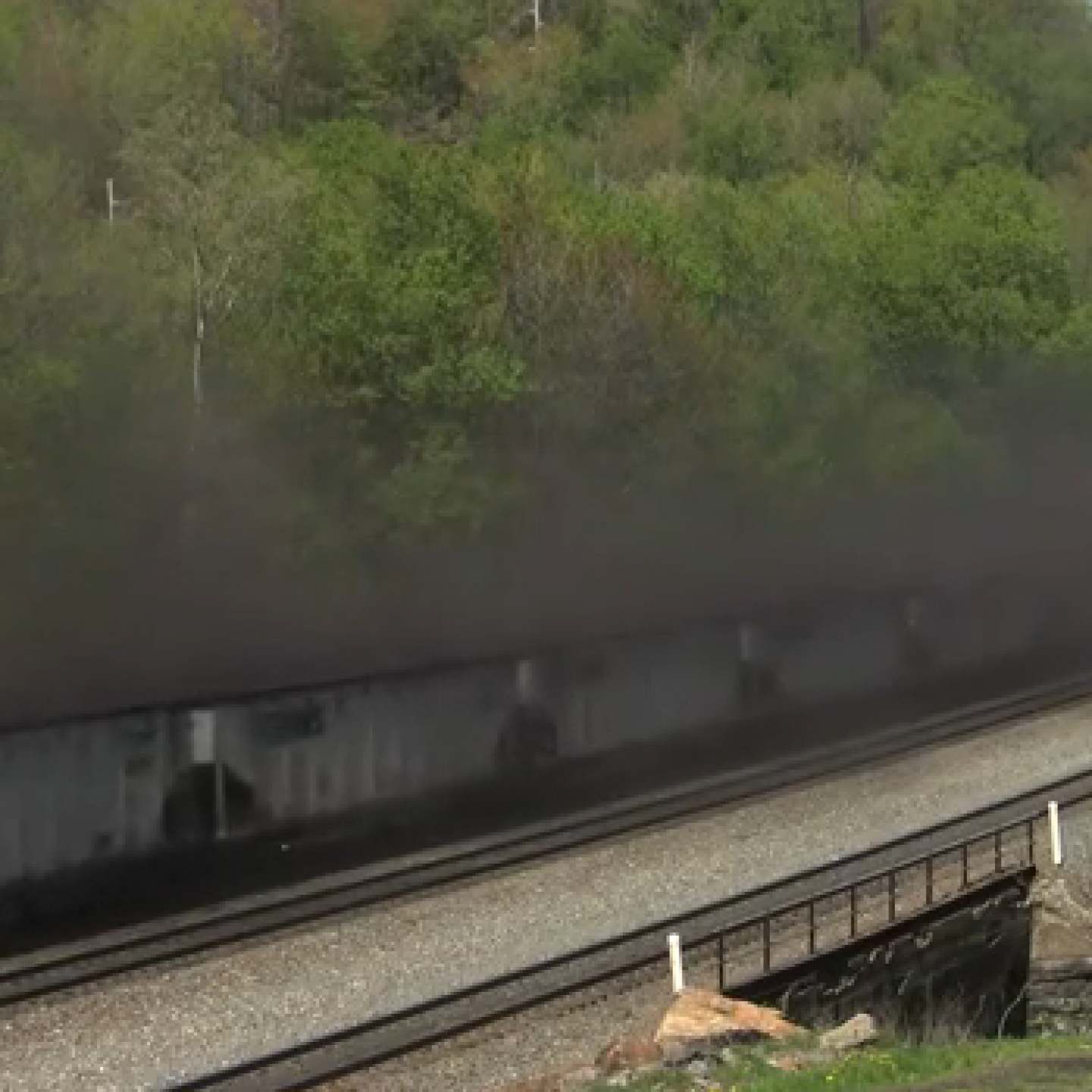
“Since 2005, BNSF has been at the forefront of extensive research regarding the impacts of coal dust escaping from loaded coal cars … From these studies, BNSF has determined that … The amount of coal dust that escapes from Powder River Basin coal trains is surprisingly large. …BNSF has done studies indicating that from 500 lbs to a ton of coal can escape from a single loaded coal car. Other reports have indicated that as much as 3% of the coal loaded into a coal car can be lost in transit. In many areas, a thick layer of black coal dust can be observed along the railroad right of way and in between the tracks. … large amounts of coal dust accumulate rapidly…”

So let’s do the math. Multiplying the amount of coal projected to arrive at the Port of Coos Bay, which is 6 – 10 million tons per year, by BNSF’s suggested 3% product loss, this calculation suggests that coal trains would release as much as 300,000 tons of coal dust along its journey through Oregon. That is an immense amount of highly toxic coal dust every day of the year!

Due to the extreme weight of a coal train and its length of 125-150 cars, four to five locomotives are required to haul it. Therefore each train passing through Eugene has at least four times the emission pollution due to diesel particulate of a single-locomotive train.

Each train that comes through Eugene on the way to the coast must make a return trip over the same rail line. The communities along the tracks will get repeated exposure to the pollution, the noise and traffic jams for each coal train.

Health Issues
Remember that the health impacts from air pollution are from the two sources: coal dust and diesel particulate. The health impacts from both are similar enough that we can discuss them together as a related set of very debilitating health outcomes.

There’s strong evidence that diesel is a lot more poisonous than other types of particulate matter because emissions also contain toxic metals and carcinogenic hydrocarbons. The World Health Organization has declared diesel particulate to be a carcinogen. Over 40 studies have linked diesel exhaust to lung cancer, as well as cancers of the bladder and soft tissues. However, there are no federal standards specifically for diesel emissions.

Though it would be enough to raise our outrage if this issue just affected the areas closest to the train tracks, this is not a localized problem for people living in the Trainsong, or River Road neighborhoods. Pollution from coal trains would become a citywide hazard.

Extensive and costly studies of the health impacts to nearby communities has been done by the California Air Resources Board at many of California’s rail yards. The additional risk of cancer from breathing or absorbing toxic diesel particulate is increased to 25-100 times over the normal risk of getting cancer. Any resident living within 2 miles of the railyard is in a zone considered to be an unacceptable cancer risk (CA Air Resources Board).

What does that mean for us?

There are 27 schools within a 2-mile radius, 14 daycares and a number of senior living residences. A dramatic increase in coal train traffic through Eugene means significantly increased health risks for young children and adults alike!

The coal industry spends millions to sway Americans to give their support for more coal, euphemistically calling it “clean coal.

This is a public relations deception so, let’s not be fooled…the environmental and health costs necessary to mine it, transport it, burn it, and dispose of its waste make “clean coal” the equivalent of “happy heart attacks” or “friendly carcinogens.”

As writer Kathleen Dean Moore, a Distinguished Professor at Oregon State University, put it, “We have a moral obligation to avert future harms, so as to leave a world as rich in life and possibility as the world we inherited.”

Any way you look at it, coal should not be part of Oregon’s future. We have a duty to stand up and say, NO!

Lisa Arkin, Executive Director
Beyond Toxics

See the Stopping Coal in Oregon home page for more background on the issue


Sign Up for Email Alerts!

* required

*

Email Marketing by VerticalResponse

The economics of exporting coal through Oregon

Each coal train spews 1 pound of dust per mile travelled!The Port of Coos Bay is planning to build a terminal to export coal delivered via rail by trains that would snake through the Columbia Gorge and Willamette Valley before switching tracks at Eugene onto the Coos Bay Rail Link. Many other communities in the Northwest are threatened with severe health hazards (coal dust leaks and diesel fumes from the increase in train traffic) as coal gets transported through communities in Oregon and Washington by rail, barge, or shipped through the Columbia River Gorge, Portland and towns north.


In today’s world of experts, economists and politicians who intone with somber faces, ‘don’t worry about the risks, we know what’s best for you,’ I have a tendency to lead my arguments for environmental sanity with the infallible “common sense” of economics. Health concerns are always vitally important to me, of course! And frankly, how can we really expect (as the bumper stickers so bluntly summarize) to have jobs on a dead planet? But we don’t usually have to go there when we lead with economic issues. Invariably when I look at the economics of a proposal, it’s not long before the benefit to the very narrow interest of one or more industry–at the expense of the public interest–becomes plain as day. But that does not stop those narrow interests from raising the fear that if we don’t do exactly as they advise the economy will collapse even further and faster than it already has. If we can beat back polluting development proposals that do not meet the public’s best interest using their own measures of value: the dollar and jobs creation, it seems like the easiest path to success.

And so it is, we can all anticipate, with the issue of the endless parade of coal trains slated to rumble through Eugene’s rail yards on their way to Coos Bay for export to supposedly coal-hungry Asian destinations.

OK, so let’s start with economics, shall we?

A report from the Sightline Institute from August of last year shows the West Coast has been down this road before–and not with pretty results. It turns out there is a very significant cost to develop land for coal export. Costs that include severe poisoning of land and water that cannot be easily cleaned up or transformed to other uses should the world wake up to the fact that maybe burning the planet up with C02 is not such a good idea. (I’m really counting on this realization very soon!) And for how many potential jobs? The Sightline report clearly documents that based on our past experience: not many at all.

But if we leave it there, the whole story cannot completely unfold. As with any business decision, it always helps to ask, how else could property be developed to create jobs? In other words, what other developments could provide MORE jobs for a given job creation investment? Isn’t that the kind of common sense we should be applying to development—besides considering the cancer and asthma risks?

The answer from the report is rather sobering: A study at the Port of Baltimore, for example, found that “coal export supports just 0.11 jobs per 1,000 metric tons, as compared to 0.41 for other dry bulk commodities, 0.43 jobs for containerized cargo, and even 1.71 jobs for autos.”

So what happened with past plans for West Coast port projects to export coal? The Sightline report summarizes several past developments that did not consider carefully the use of taxpayer money in sound long-term investment in a stable commodity. The efforts of the Port of Portland in the 80s and the Port of Los Angeles in the 90s are both portraits of broken promises and complete failure. If you add in the very real risks to global climate change represented by the continued use of coal as an energy source, it seems clear that investing in a new infrastructure to ship coal oversees is a wild-eyed gamble not worthy of serious consideration.

In reviewing past port coal development failures in Portland, Oregon and Los Angeles the report concluded that, “The abandoned coal export facilities locked up millions of dollars in stranded investments and clean‐up expenses, not to mention years‐long missed opportunities for more durable economic development choices.” That’s not encouraging. Sadly, when a city or county considers new development, it rarely considers what happens if and when the market for that commodity or product dries up. With coal, the dirtiest fuel on the planet, the consequences are severe and costly!

John Jordan-Cascade,
Communications Manager for Beyond Toxics

See the Beyond Toxics Stopping Coal in Oregon home page for resources and more background on the issue.

Next week: more sobering news about the costs to human health from exporting coal.

See shocking raw footage of a coal train in transit (YouTube) and the trail of coal dust it leaves behind!


Sign Up for Email Alerts!

* required

*


Email Marketing by VerticalResponse