
Data Graffiti
Imagining a new future for the West Eugene community
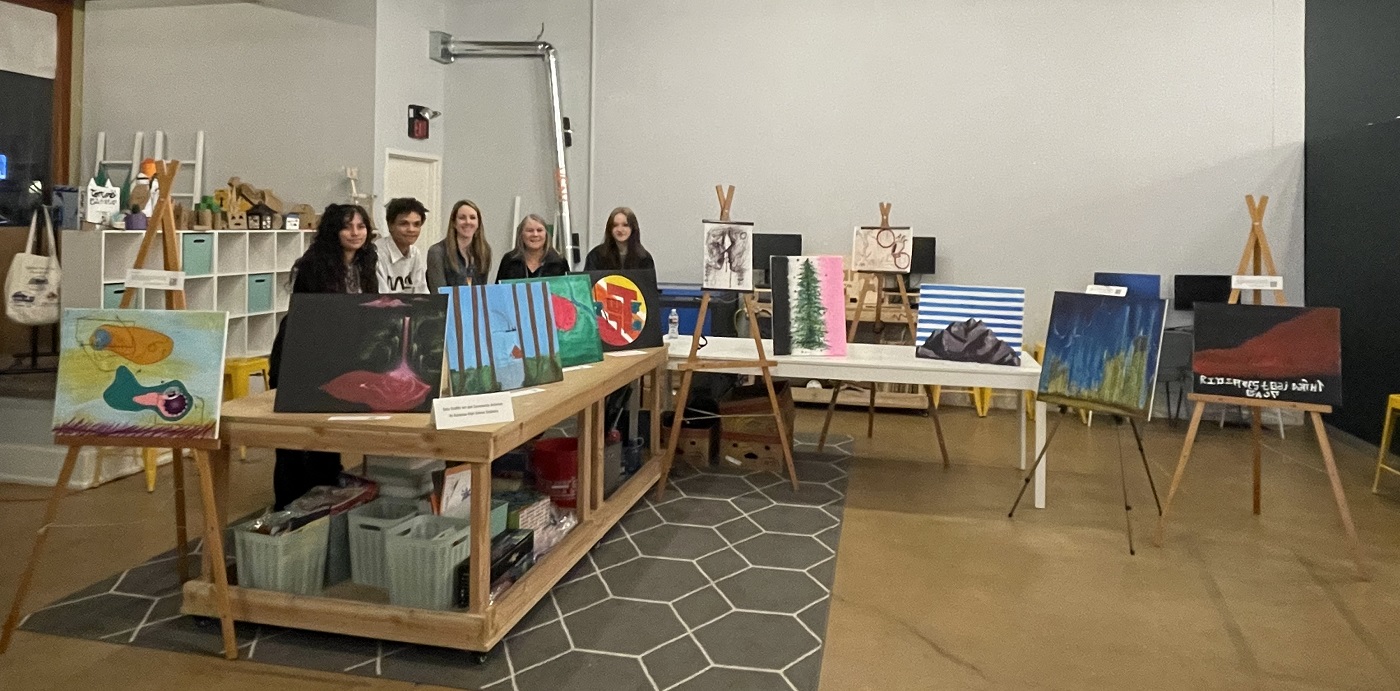
In a Kalapuya High School classroom the week before winter break, a group of students grappled with the issue of industrial pollutants in West Eugene. Creosote has been dumped in their community for almost a century, and residents have filed thousands of complaints about the nauseating odors and health issues that have defined living in this area. Years of community organizing and public pressure led to the closure of J.H. Baxter, a wood treatment processing facility and one of the major sources of pollutants in West Eugene, in 2022.
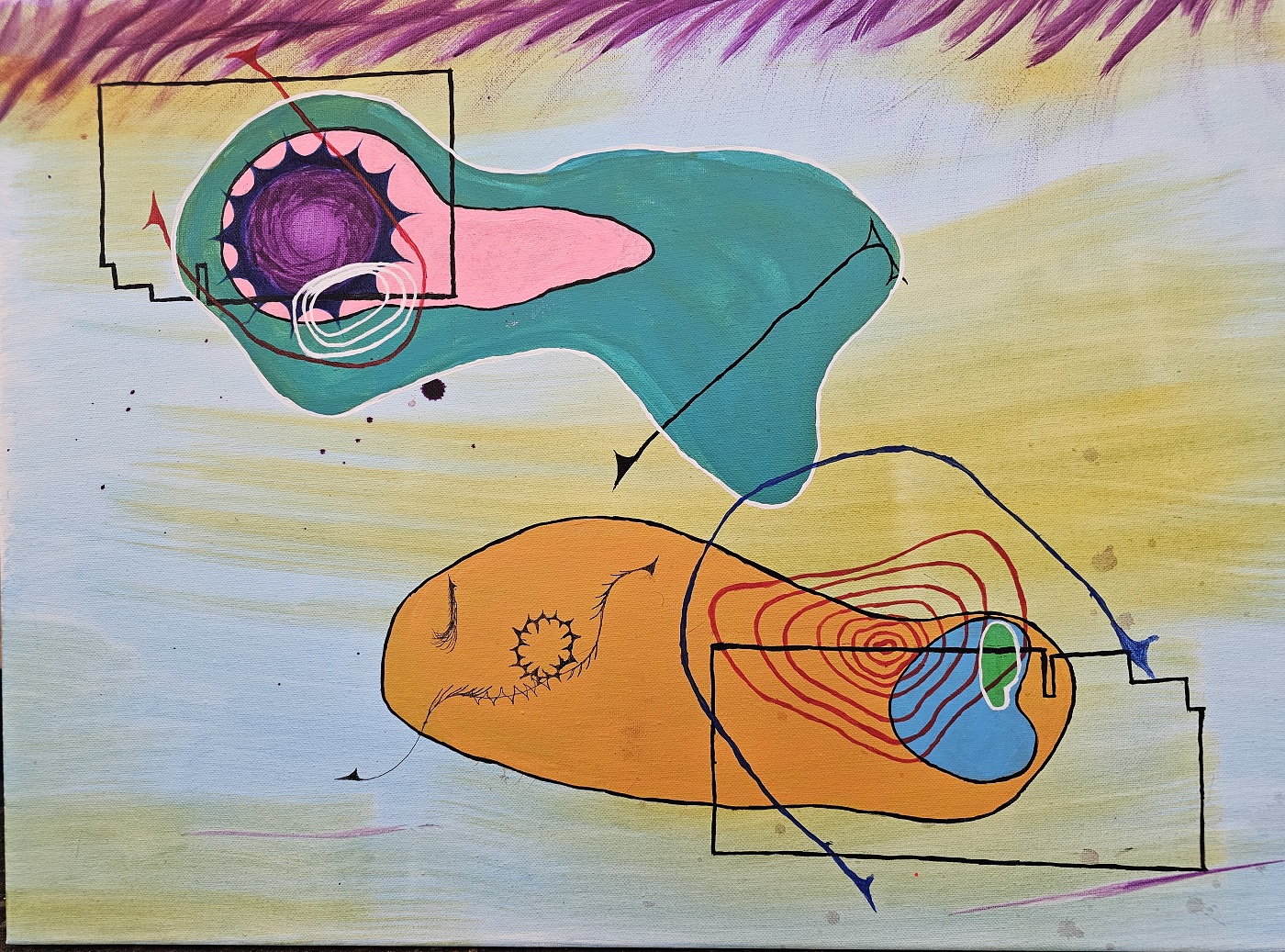
Students were asked to imagine potential pathways forward for their community, and began to explore what their role could be in enacting change. In order to bring awareness to the fact that West Eugene is disproportionately impacted by pollution, these high schoolers created abstract art inspired by different datasets that detail dimensions of environmental injustice in their community.
Below you will find the student’s creations as well as the datasets that inspired their work. It is their hope that these art pieces will inspire you to learn more about the heavy burden of pollution in West Eugene and what can be done in future to remediate these wounds.
Artist: Metzley Romero
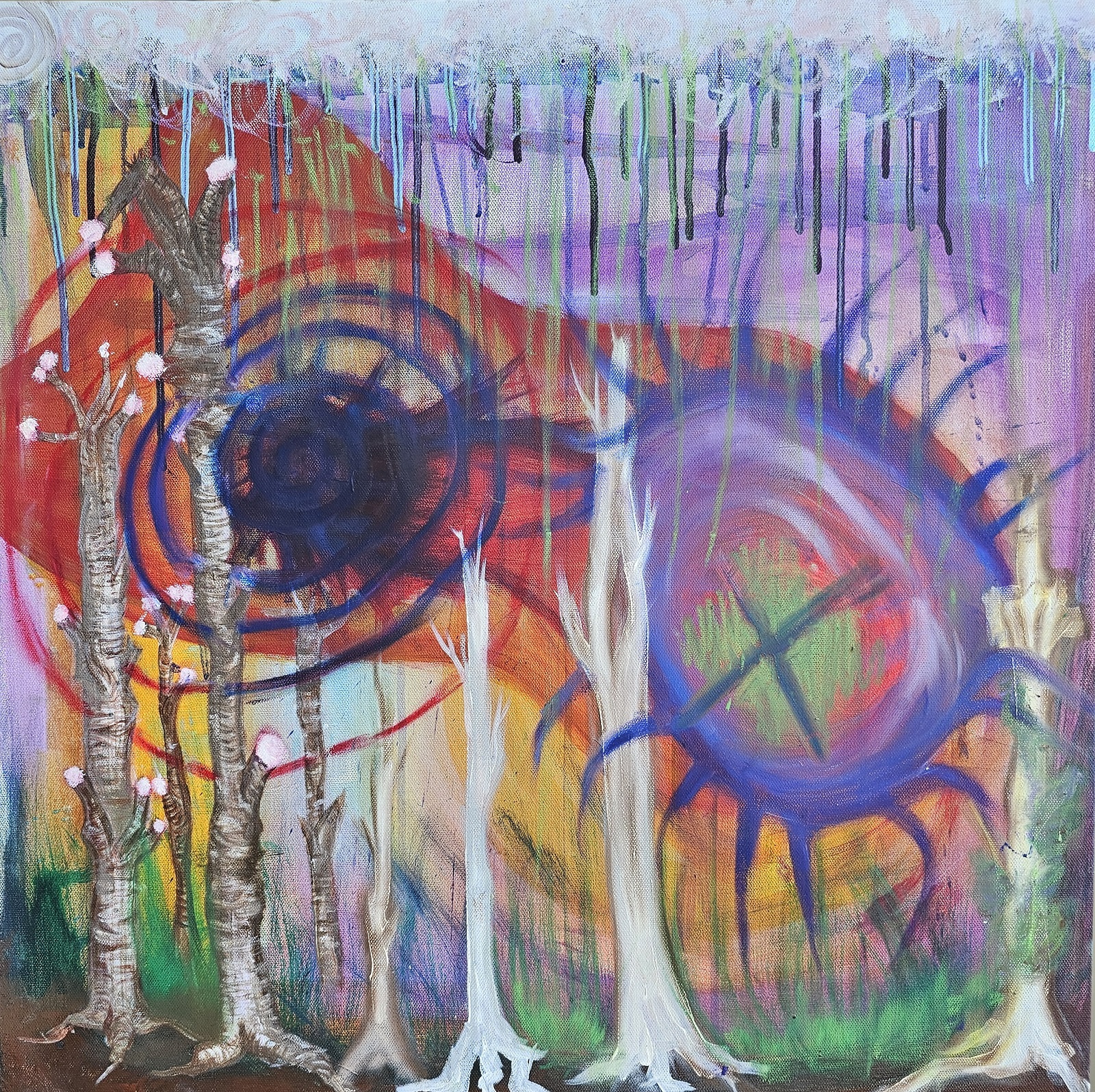
“I am positive that if my family and I were knowledgeable about the hazards in the Bethel Area, we would have not made the life altering decision of moving homes. Just this last year I was informed about J.H Baxter and their doings: this infuriated me but mainly left me in fear for myself, my family, friends and pets.
I am making it my life’s goal to use my voice for those who cannot speak or don’t know about the toxins affecting them to say; please help us. We are drowning in cancer-causing toxins that affect the thousands of west Eugene residents and animals in life altering ways.
I have heard multiple stories from a wide range of people who express that they think they have been affected by J.H. Baxter toxic emissions, people who have gotten cancer and had to face chemo, people who break out in hives constantly every time they come to stay in the West Eugene Area. I have also personally experienced developing asthma after living in the west Eugene area for only 5 months, along with constantly feeling sick and “not knowing” why.”
Artist: 'Cheezeburger'
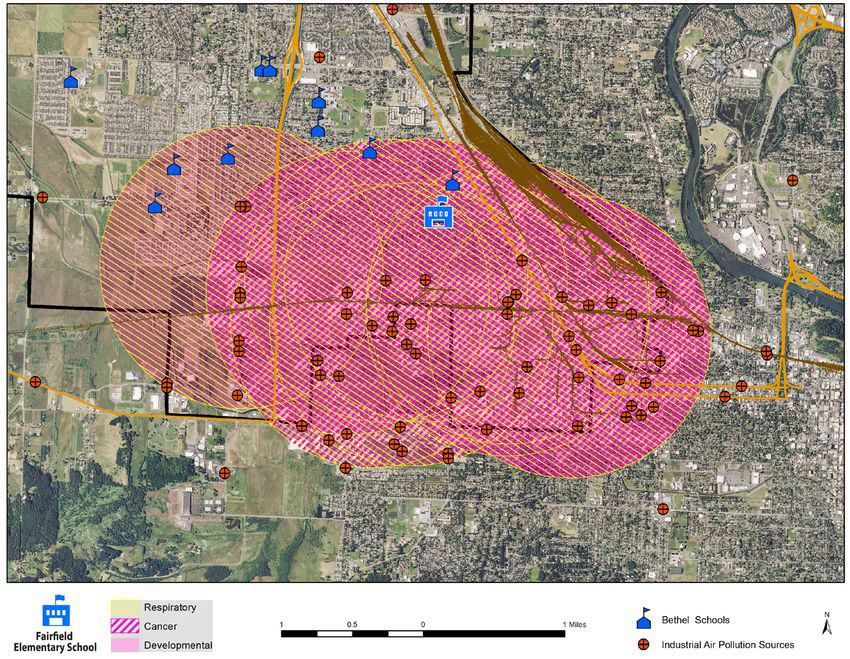
Overlapping daily exposure to toxicants emitted by industries within one mile of Fairfield Elementary School.
Cheezeburger is a senior at Kalapuya High School. They first learned about the effects that the J.H. Baxter facility has had on their community in a science class at Kalapuya and have been following Beyond Toxics ever since. Their artwork is an abstract representation of how their community has been negatively impacted and their desire to see change sooner.
Cheezeburger was unaware of the industrial pollution in their community and the consequent negative health effects until they noticed that Trainsong park was closed down. After learning about the dioxin contamination of their neighborhood in school, Cheeseburger realized that they had unknowingly been risking their health and the health of their animals just by visiting their favorite park every day.
“There needs to be repercussions. This is impacting the community. This is a lower income area so that’s screwed because you’re making these people sick and you just know people will not be able to financially recover from this. It’s making their lives even harder.”
Cheezeburger hopes that people spend time analyzing the layers of meaning in their painting and doing their own research. In an interview with Beyond Toxics staff, they said “I want to represent my community, and I need to know what’s going on. It’s wild that so many people don’t.”
Artist: 'Kalapuya Student'
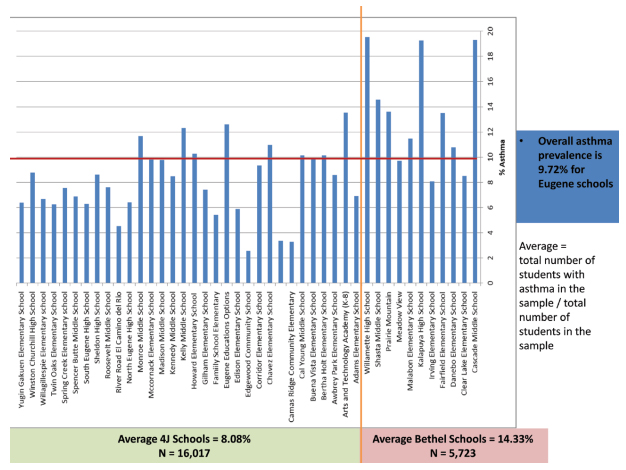
Percent of schoolchildren with asthma
Source: Graph originally published in a Beyond Toxics report, “Environmental Justice in West Eugene: Families, Health and Air Pollution“
Bethel and Eugene 4-J School Districts
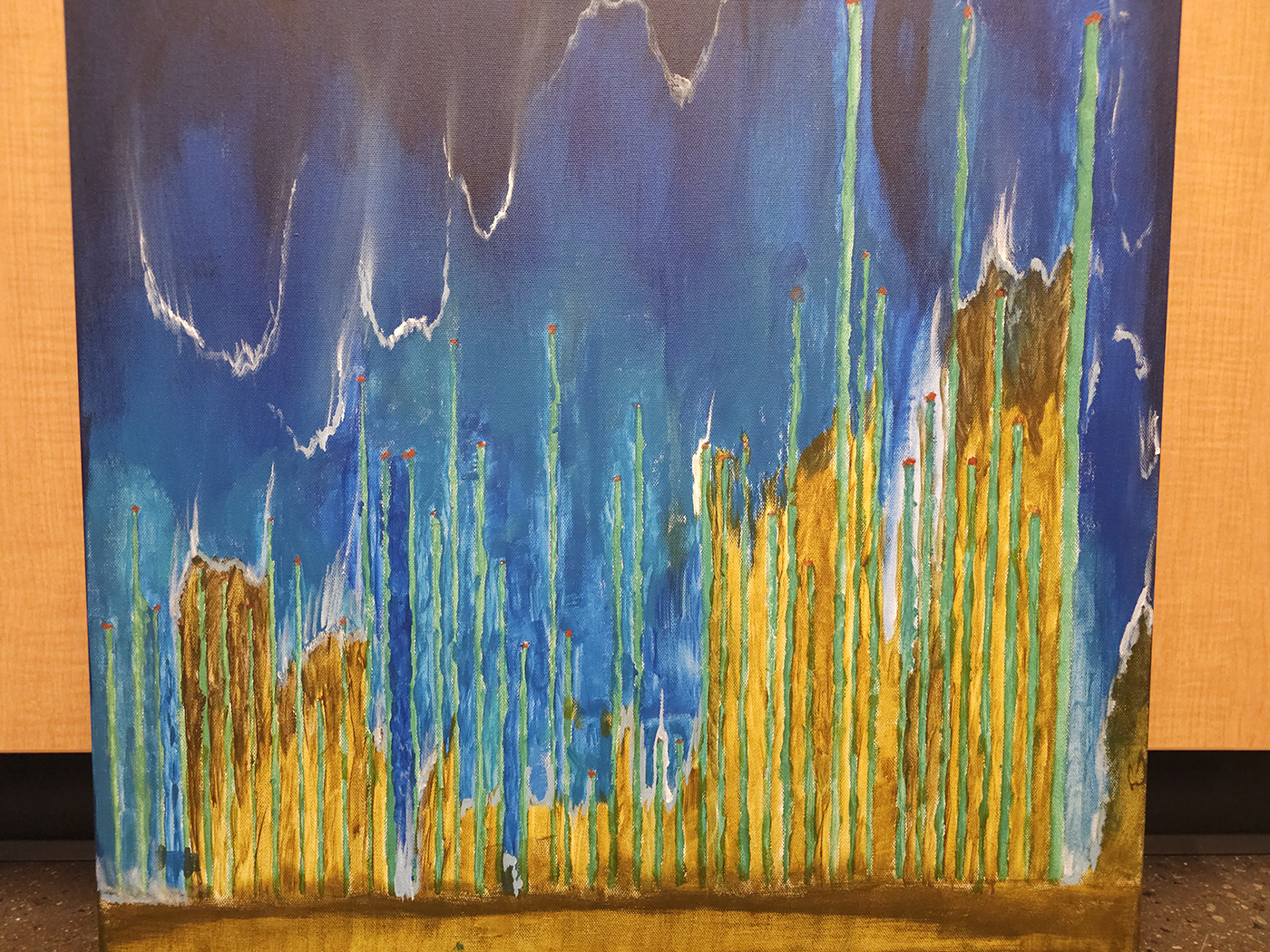
As a student in Bethel, the dataset that made the biggest impression on Kalapuya Student compared the rate of students with asthma in the 4J school district to the Bethel school district. Even though the student population in Bethel is a third of the size of 4J, they have almost double the amount of asthma prevalence, as indicated by the right side of Kalapuya Student’s art piece. He chose to contrast the harsh lines of the graph with the natural scenery of ocean waves, where the air is free from pollutants and you can take a deep breath of fresh air. He says “We’re isolated from those kinds of pleasant sceneries and good environments and actually healthy air, which is why I chose to paint ocean scenery.” Kalapuya Student is shocked by the prevalence of asthma in Bethel students and hopes his art piece will be an effective tool for spreading awareness
Artist: Taylor Peppers

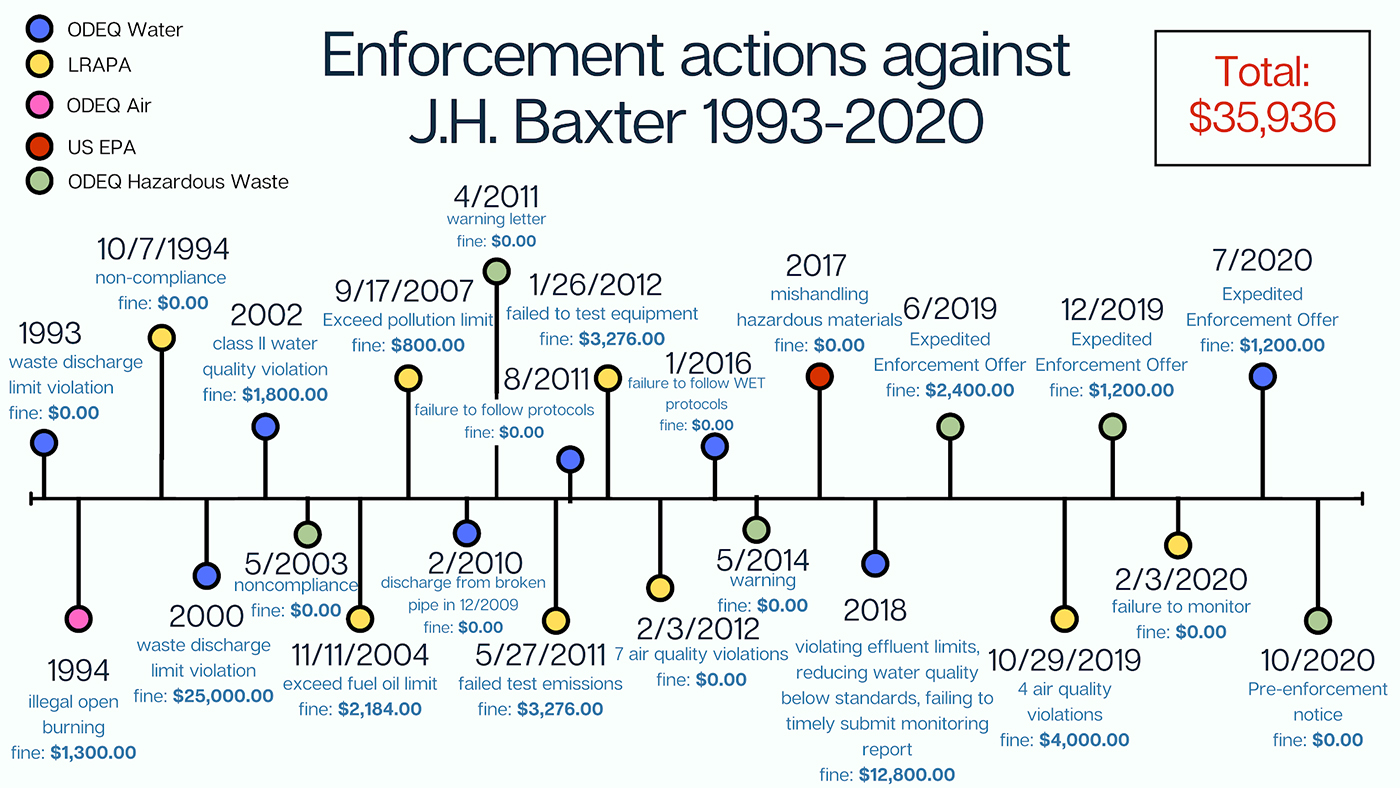
Details the enforcement actions taken by five different environmental agencies against J.H. Baxter between 1993-2020.
This is an estimate by Beyond Toxics based on regulatory agency records.
Source: Created by a Beyond Toxics intern.
Click here to learn more.
Taylor has lived in West Eugene their entire life, but first heard about the community’s heavy burden of pollution last year after the closure of Trainsong Park. The Oregon Department of Environmental Quality (DEQ) collected soil samples at seven sites away from the J.H. Baxter facility and found dioxin levels of 71 ppt at the park, the cause of which is still unknown.
Taylor based their artwork off a diagram that lays out the enforcement actions against J.H. Baxter over the course of 27 years. In 2020, the fines issued by five different public agencies totaled only $35,936. This student decided to use the branches of a pine tree to represent the spiking rates of these fines, many of which have still yet to be paid by Baxter Industries.
Artist: 'Anonymous'
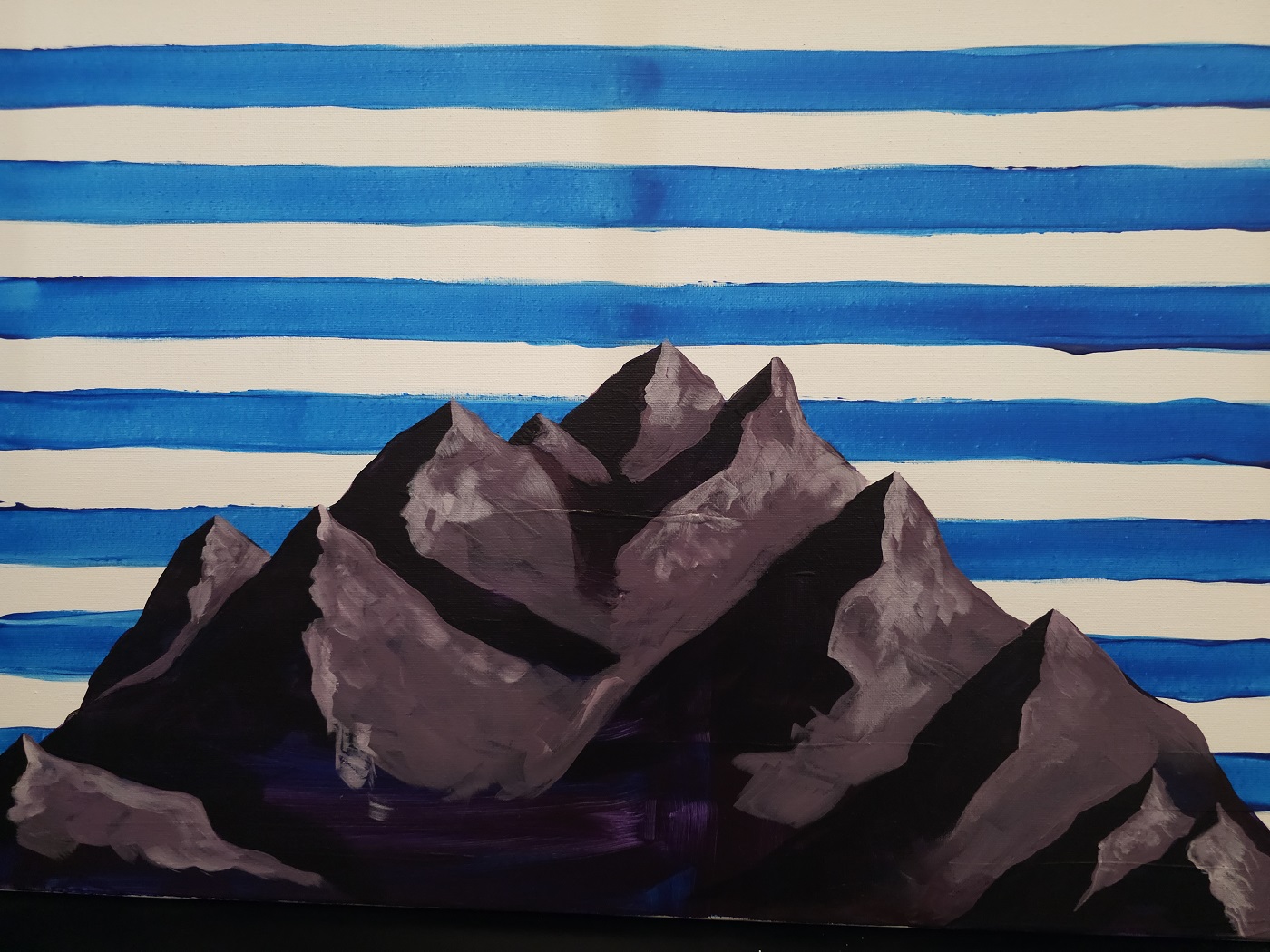
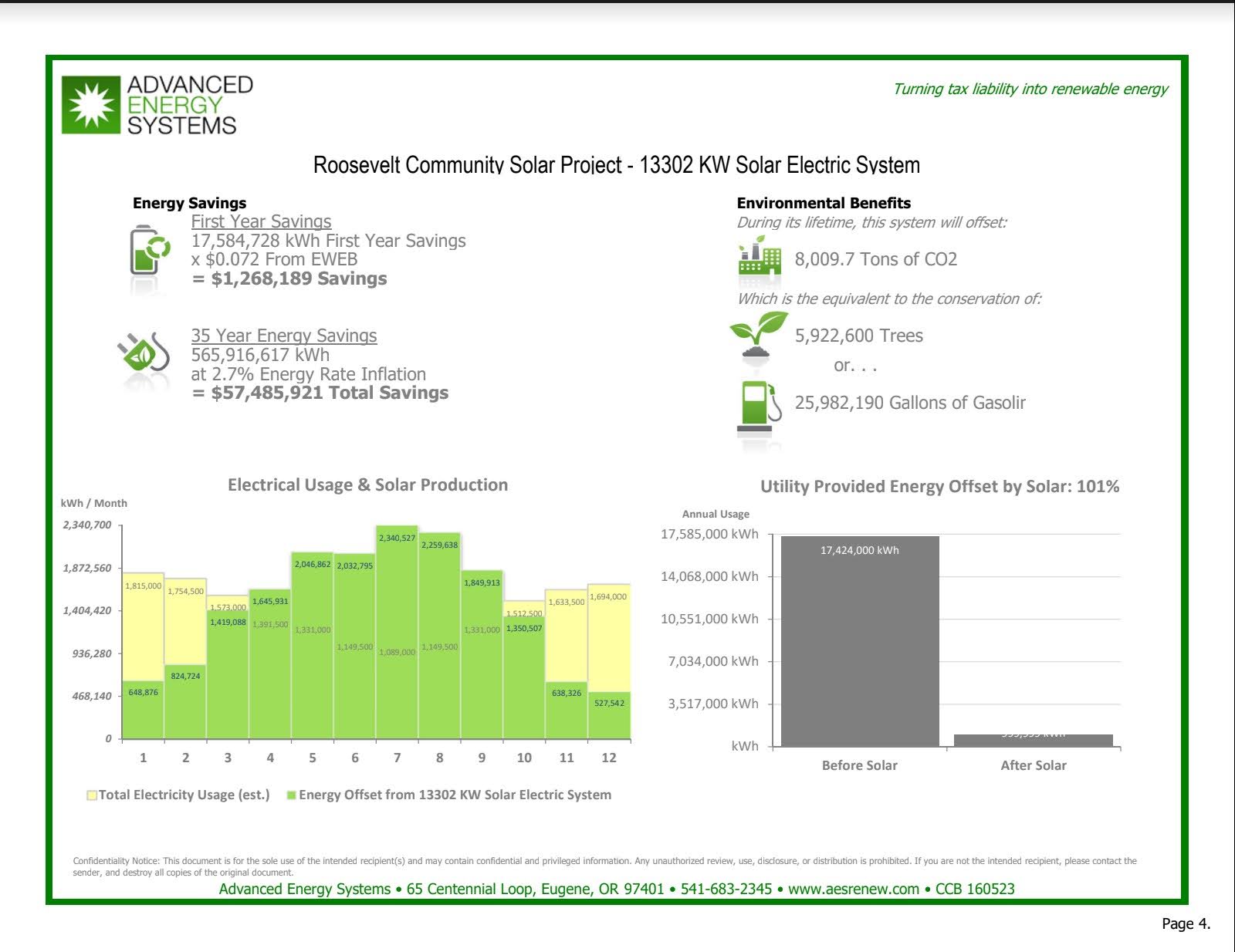
This graphic is a projection of energy savings over time if the solar array project was built out. Beyond Toxics is working with partners and Advanced Energy Systems to create a vision for a large solar array on the former J.H. Baxter Superfund site that could provide renewable power and other energy benefits for the Bethel neighborhood.
Artist: Jesus Gonzalez
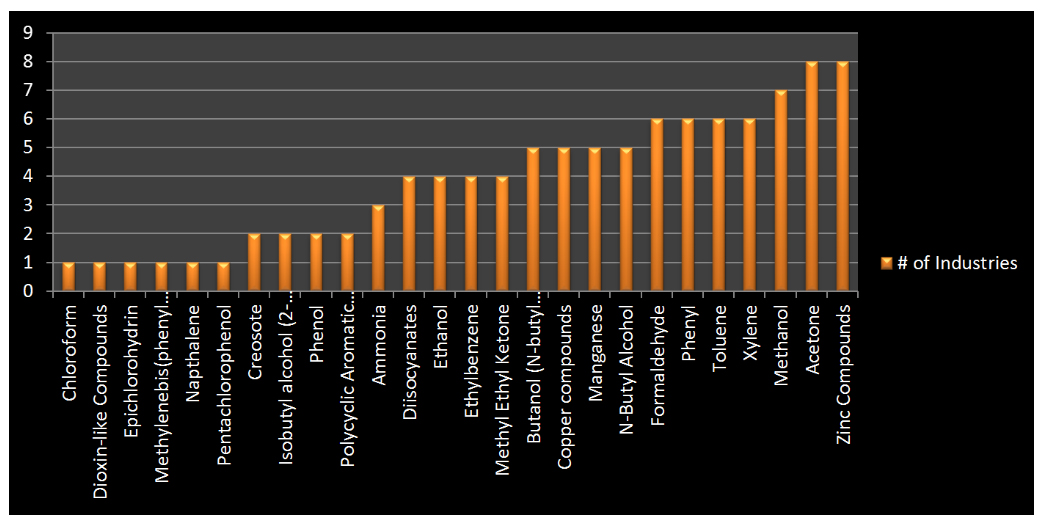
Top 3 Chemicals by Number of Industry Emitters*
Provides information about which air toxics are most frequently released into the air and the number of industries releasing those pollutants.
Source: Eugene Toxics Right to Know Report (2010-2011)
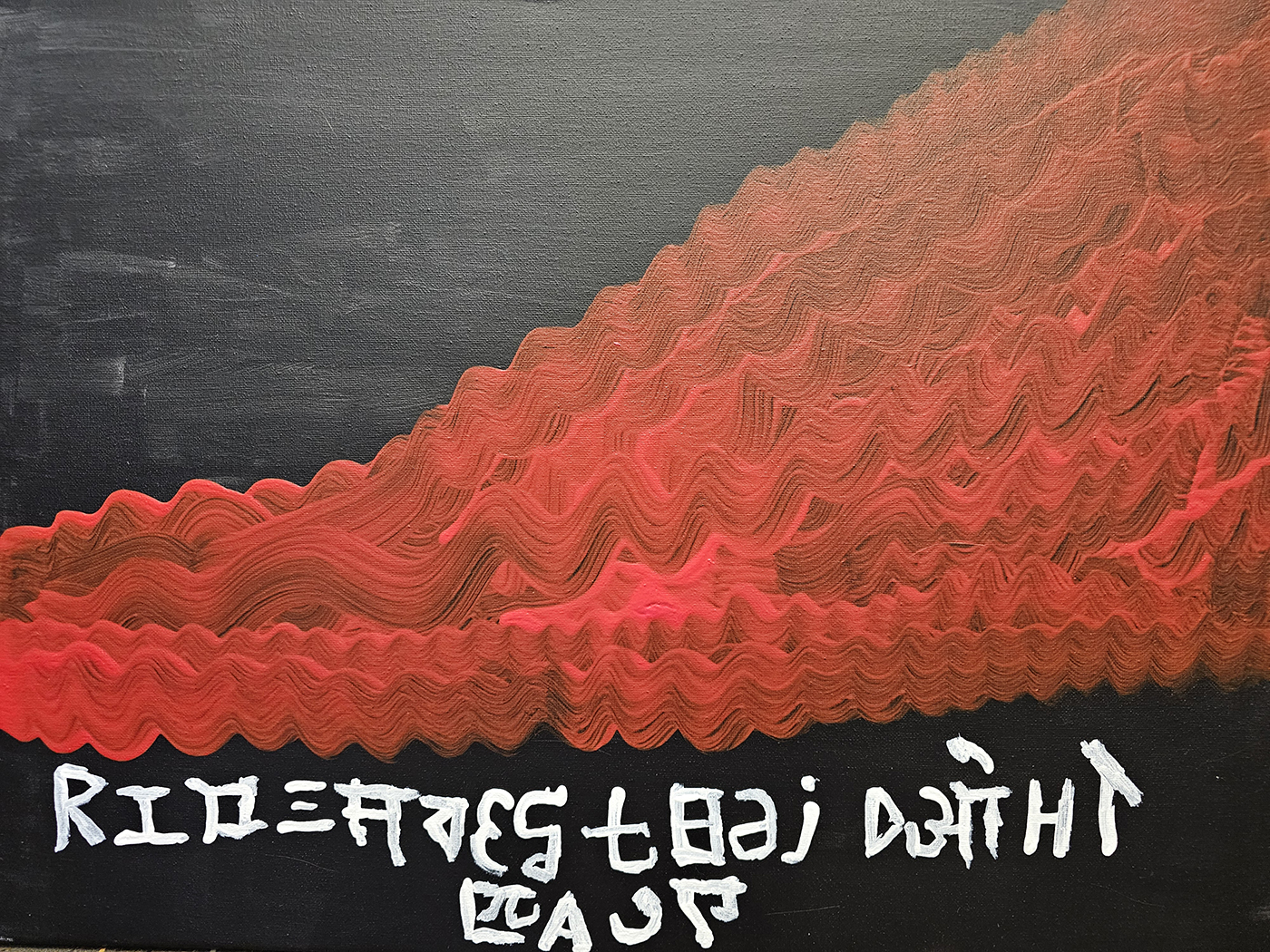
Jesus based his artwork on graph detailing the different air toxics most frequently released in Eugene during 2010. He emphasizes the fact that toxic air pollution is not unique to our area.
“My art piece is about the biggest pollutants around here. [Industries] throw bad stuff in the air we breathe, and they know about it but they just don’t really care. The letters are all from a different language because this isn’t the only place where stuff like this happens. It happens all over the place. I couldn’t pretend to be surprised.”
Jesus was not aware of the closure of J.H. Baxter, which he now realizes is about a 20 minute walk from his home. He hopes that people will look up the health effects of some of the toxic chemicals listed on the graph.
“This is my first time hearing about J.H. Baxter. It sucks cuz some people can’t grow stuff in their backyards… There’s kids that play around and they get sick just for stepping outside. That sucks.”
Artist: Sam Long
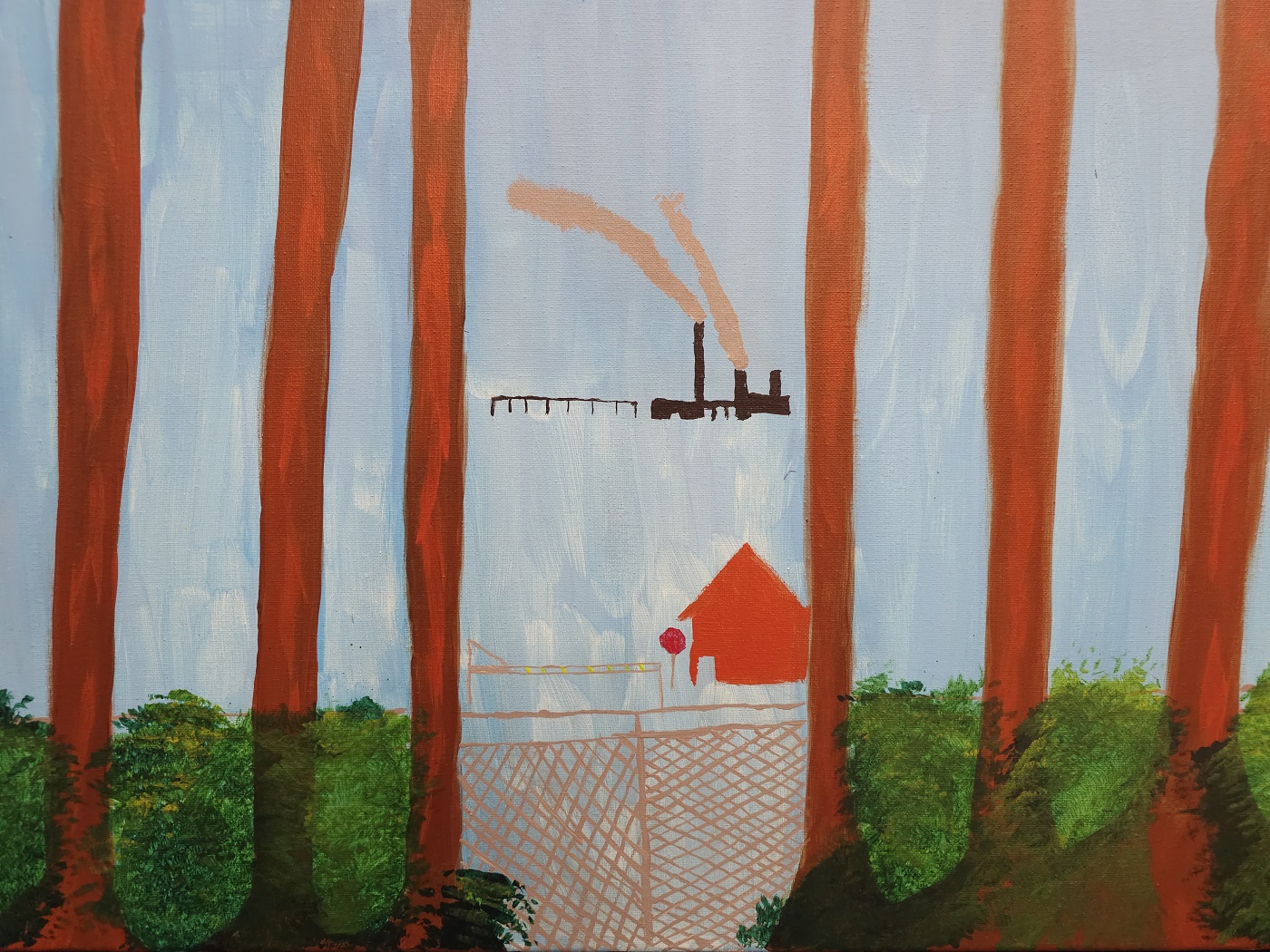
Sam’s painting isn’t based on data but the view of the J.H. Baxter facility that they know best.
Artist: Ethan Edler
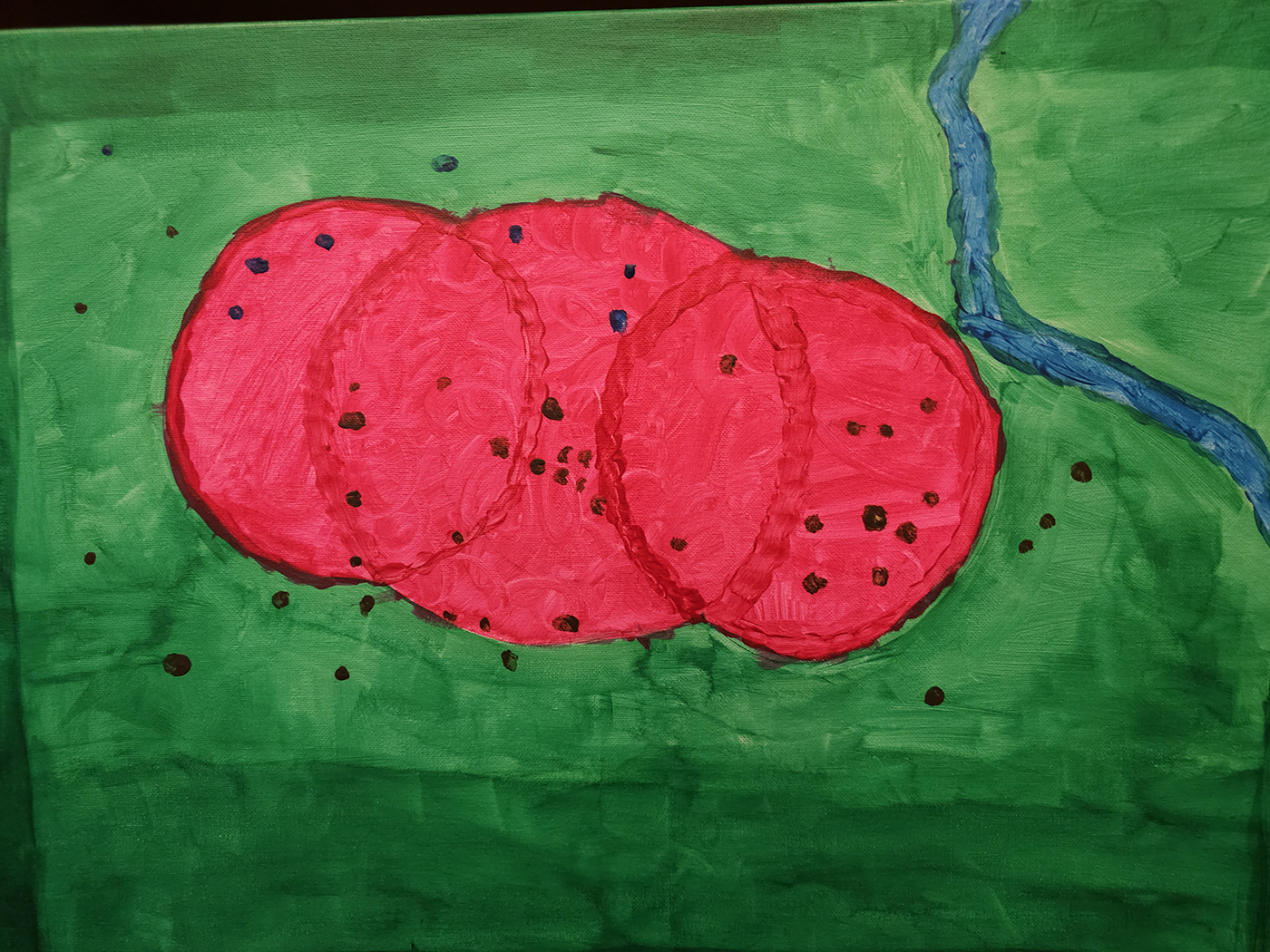
Cumulative air toxics exposures from Eugene industries as they potentially impact residential neighborhoods and schools.
Source: Eugene Toxics Right to Know Report (2010-2011)
By a student at Kalapuya High School in West Eugene.
Artist: Indy Andres
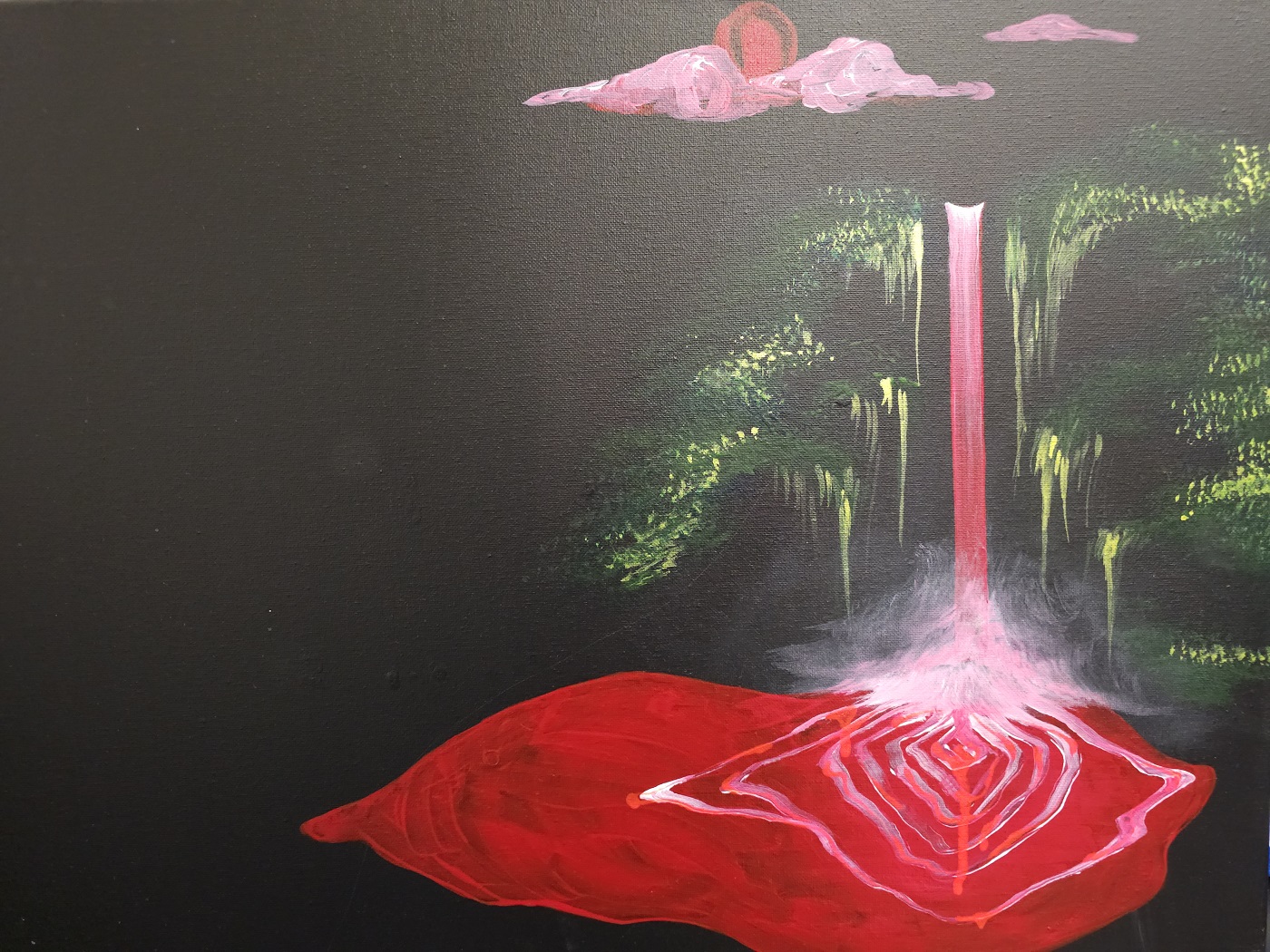
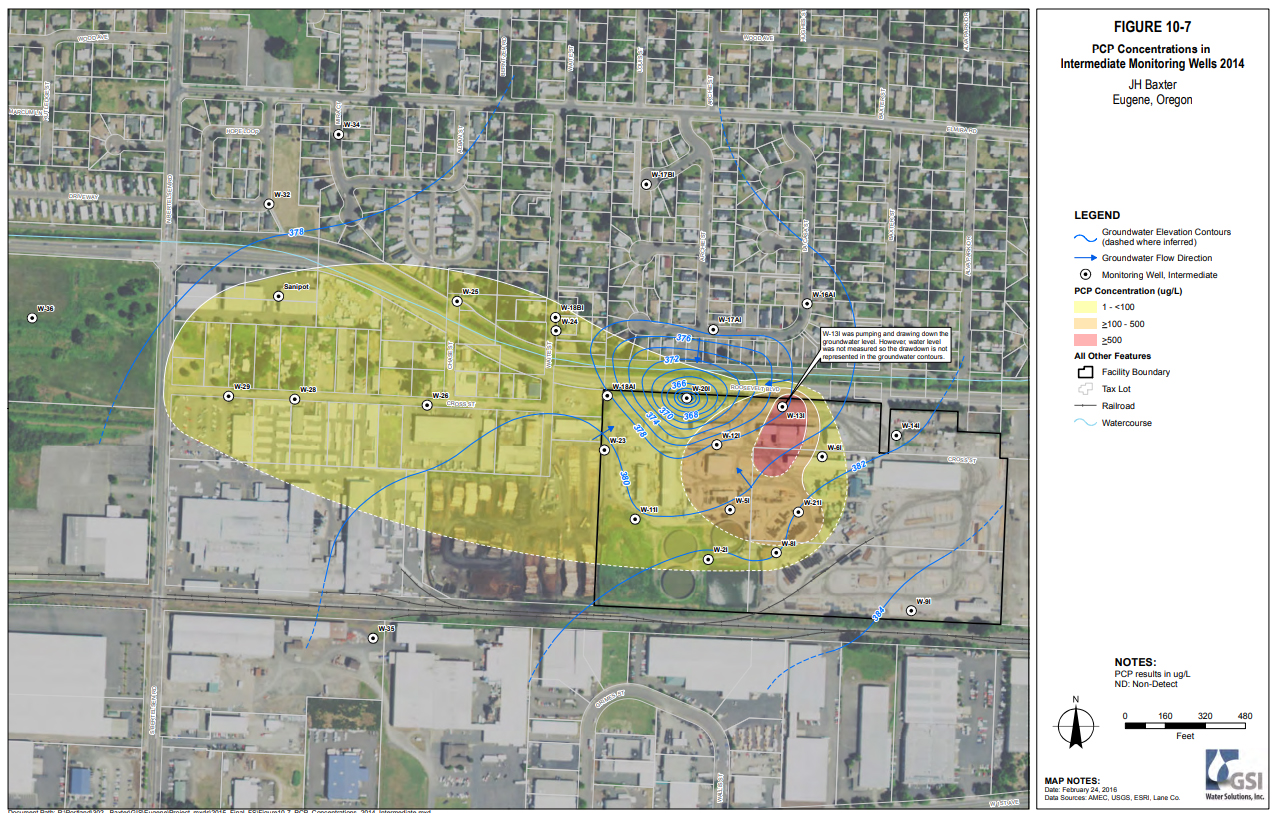
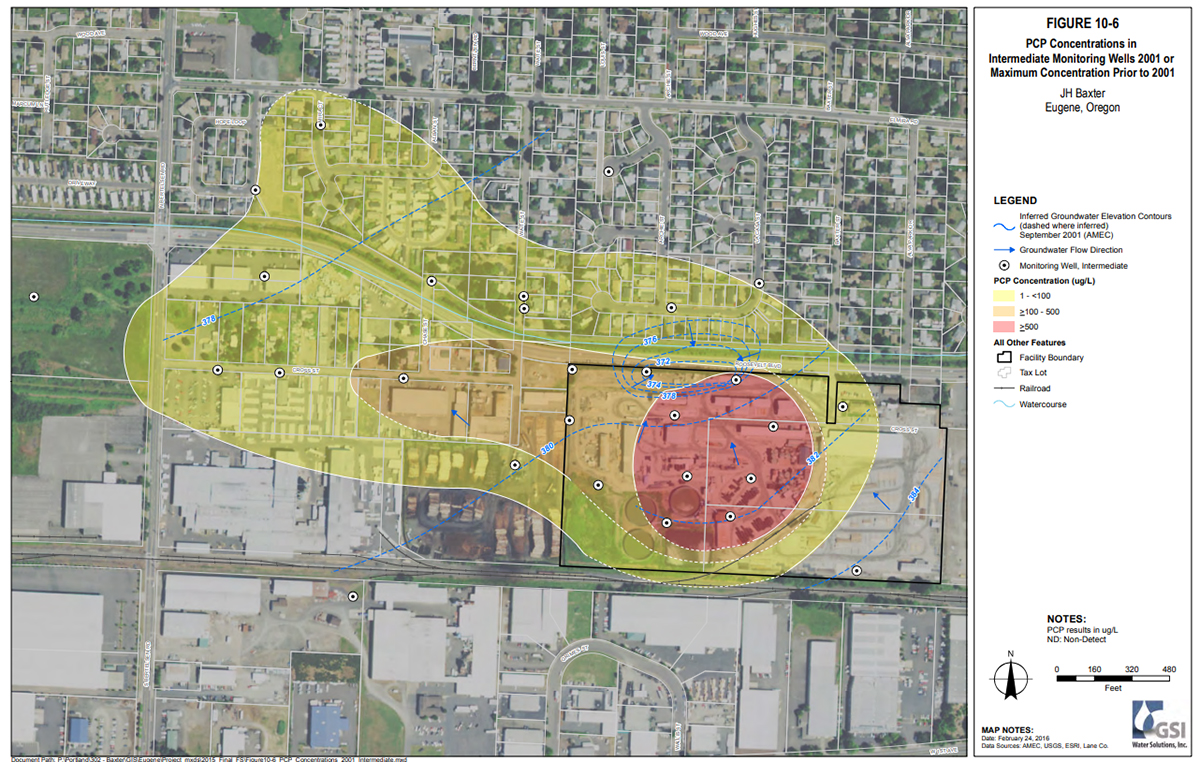
Groundwater contamination from JH Baxter measured in 2001 extended beneath residential neighborhood. By 2015, pumping and treating of groundwater had reduced reach of plume.
Artist: Dana Hought
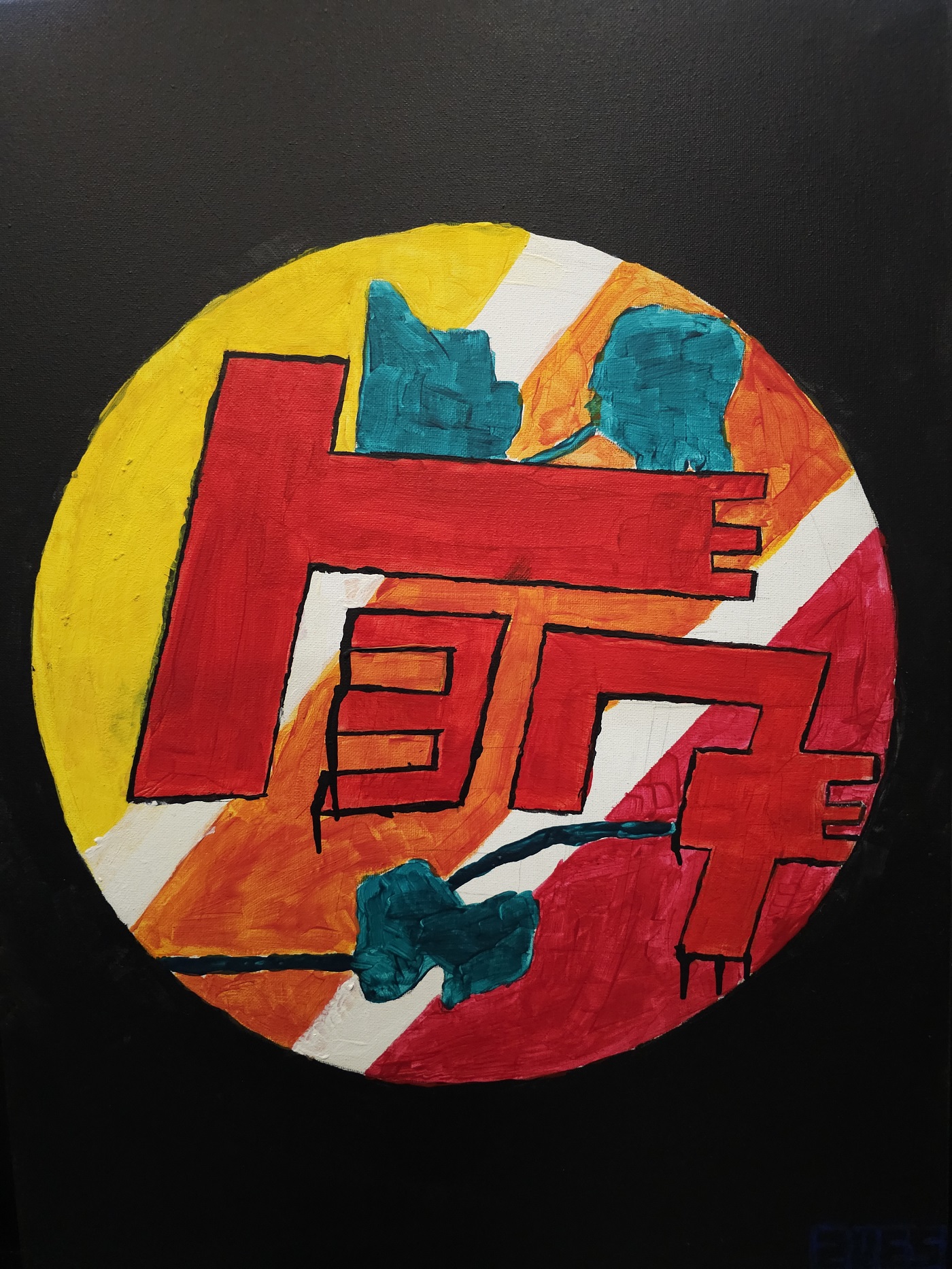
Overlapping daily exposure to toxicants emitted by industries within one mile of Fairfield Elementary School.
Source: Eugene Toxics Right to Know Report (2010-2011)
*Data only reflects top three chemicals most frequently reported.
Resources:
https://ceapps.eugene-or.gov/toxics/
Graph originally published in a Beyond Toxics report, “Environmental Justice in West Eugene: Families, Health and Air Pollution“
Dana feels very strongly that the city misses what the West Eugene community needs most. As someone who has generational ties to Golden Gardens ponds, he is sad that the city has chosen to put in a huge sports complex in its location, potentially damaging the fragile habitat. He is concerned that this plan will not strengthen community ties, but will rather bring mass crowds of commuting athletes from far away. His painting depicts the ponds in which many endangered species live, along with his passion for old cars. He hopes that everyone reading this will sign the petition to ensure that, at the least, the sports complex will not use artificial turf lawn, which contains microplastics that are detrimental to the critical pond habitat.