Action Alerts
TAKE ACTION! Get involved to support climate and environmental justice across Oregon.
Coffin Butte Landfill Title V Permit Public Comment Period
Republic Services' Title V Permit for Coffin Butte landfill is up for renewal for the first time since 2009. Title V Permits determine how much pollution an entity is allowed to emit. Republic Services is seeking to increase the pollution allowed by their Title V Permit by 2-4x what their permit currently allows.
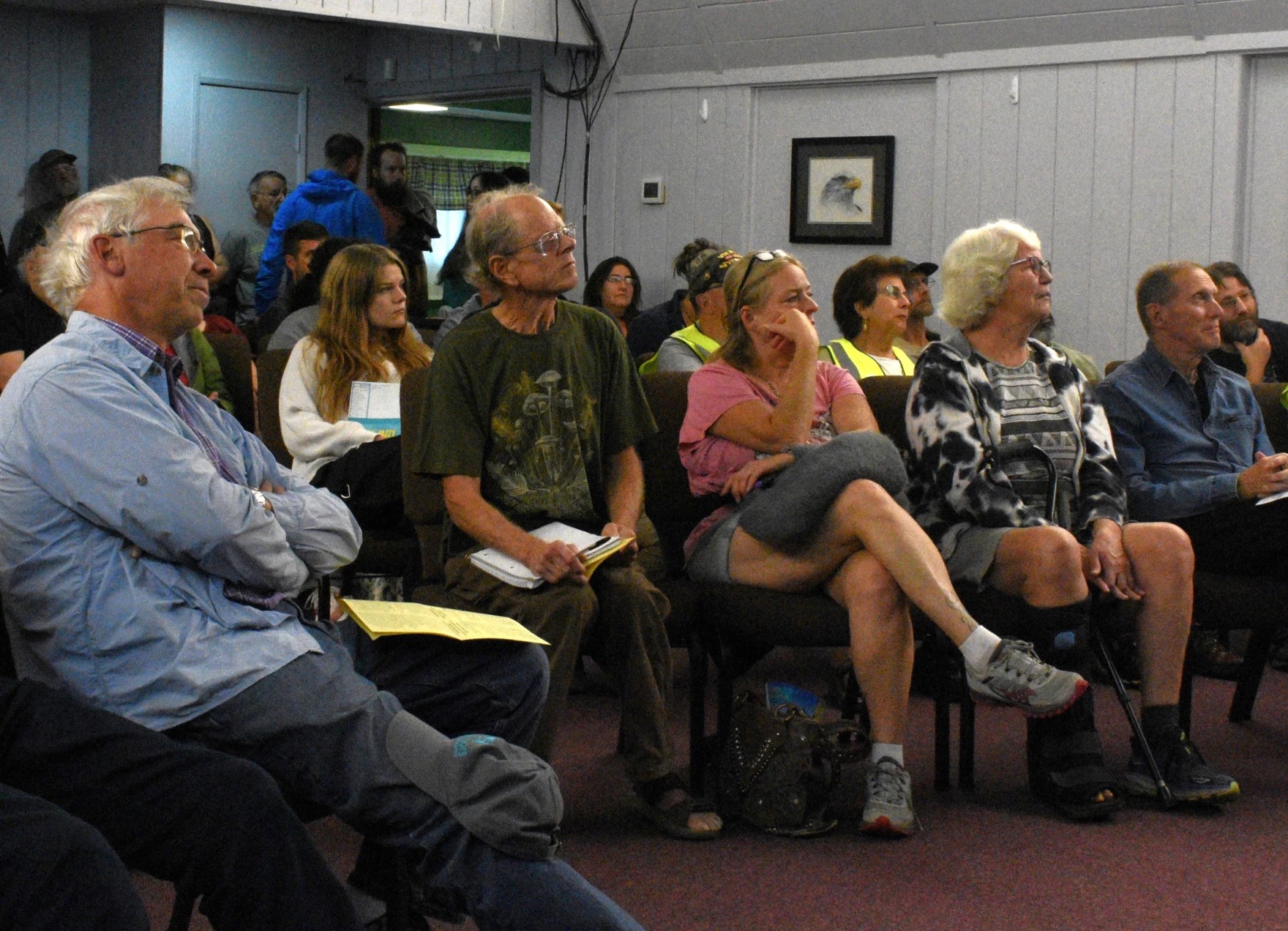
There is an upcoming virtual hearing and public comment opportunity for this permit application!
Click here to review Republic Services' Title V Permit application.
Hearing Date: Tuesday, May 12 at 6:00 p.m. Click here to register for the meeting via Zoom.
Written Comment: The deadline for written comments has been extended to Friday, May 29 at 5:00 p.m. You can submit written comments via email at [email protected] or the DEQ website. Click here to submit written comments through DEQ's website.
A Title V Permit is a regulatory document guiding the conditions under which a large industrial source might emit pollution into the environment.
Title V Permits allow a certain amount of pollution from an operation to be put in the surrounding environment. Permits set the upper limit on how much of different types of pollution an operation may emit, how those limits are calculated, and the practices an operation is expected to follow to ensure those limits are followed.
Title V permits are a part of the clean air act. They regulate how much criteria air pollutants an operation can emit and centralize the regulations the operation must follow. DEQ has some flexibility in how to implement these regulations, however, there are limitations to what they can require.
Odor has been a continuous issue at Coffin Butte and real time air monitoring for hydrogen sulfide (H2S) or total non methane volatile organic compounds (VOCs) is necessary to provide an objective point of reference for odor management.
Currently most resident complaints are resolved by a Coffin Butte Employee conducting a patrol and finding no detectable odor or another odor that “is not attributable to Coffin Butte." In other words, the odor problem reported by a resident is somehow never the result of landfill operations.
All parties are locked into a “he said, she said” conundrum. Real time monitoring for odorous pollutants at the the southeast, south, and southwest fence line of the facility can provide a meaningful point of reference to help resolve this administrative deadlock.
DEQ is proposing restricting operating hours from 7am-5pm Monday through Saturday with no operations on Sunday. DEQ should be clear on whether any permitted activities are allowed outside of these hours. Is this restricting operations of the working face, operations of any heavy machinery, or another standard entirely? Providing a more explicit standard will give both operators and nearby residents clear guidelines for complaints and operations.
To ensure all visible particulate emissions are properly managed DEQ is proposing a requirement for operators to visually inspect the landfill for dust plumes escaping operational boundaries for 30 minutes once a week. At minimum, this should be required to take place during peak operating hours, which we estimate to be 10am-2pm. The requirement of camera monitoring for this condition during all hours of operation would be a stronger enforcement mechanism. This would allow DEQ to have a corroborating point of evidence for any nearby complaints.
SB 726 Methane Emissions Monitoring Rulemaking Comment Period
Senate Bill 726, passed in 2025, requires Coffin Butte landfill to implement better methane monitoring procedures. The proposed monitoring, corrective actions, and the recent record-breaking $3 million fine are critical ways of holding Republic Services accountable for public health harms.
There is an upcoming virtual public hearing which will include a presentation of the rule changes by DEQ and the opportunity to give comments verbally. This is an excellent time to let DEQ know they are on the right track! Stronger monitoring procedures help protect local public health for people who live and work near landfills and keep Oregon accountable for reducing greenhouse gas emissions.
Hearing Date: Friday, May 29 at 5:15 p.m. Click here to join the meeting.
Written Comment: You can submit written comment to the DEQ at [email protected].
Oregon Department of Environmental Quality (DEQ) proposed the use of drones to detect leaks of landfill gas at Coffin Butte to fulfill the requirements of SB 726, similar to an EPA-developed plan called “OTM-51.” DEQ has also suggested that Coffin Butte may develop a different set of procedures to conduct monitoring, so long as they are evaluated and approved by the DEQ. These better practices will lead to more efficient and effective gas leak detection so they can be repaired in a timely manner.
To learn more about why these methods are necessary, read Beyond Toxics’ 2025 report, “Oregon’s Secret Climate Killers.”
The rulemaking for SB 726 also makes small adjustments to clarify the statewide methane monitoring and reporting requirements for all large landfills. It also allows Oregon landfills to use the OTM-51 drone monitoring strategies; DEQ ruled this as optional.
Lane County Public Works has pursued these stronger monitoring practices at Short Mountain Landfill to support the county’s greenhouse gas emissions targets. Beyond Toxics hopes that other landfills will follow suit, though for-profit landfills often do not have an incentive to do so.
This rulemaking is a historic step in modernizing landfill gas methane regulations in the US. Oregon is the first state to pass such legislation, though California and Colorado have also pursued their own stronger standards.
The rule changes proposed to methane monitoring at Coffin Butte are a strong step in the right direction of comprehensive landfill gas monitoring. Requiring operators to monitor the whole landfill, including the working face, helps ensure as many leaks are caught as possible. Research shows that up to 79% of landfill gas emissions come from the working face, so the proposed rules reflect a common sense approach to managing odors and greenhouse gas emissions. The clarified data reporting procedures alongside the requirements to monitor the whole landfill will produce helpful data for future monitoring.
Detecting and repairing landfill gas leaks will reduce odor problems for nearby homes and businesses. Nearby businesses, particularly farms and wineries, have faced trouble hiring labor willing to work in odorous environments and the odor even prevented the sale of a nearby winery when prospective buyers got a headache from landfill gas exposure. Odor complaints from residents are common during, particularly in winter inversions. Odors hamper local and tourist scenic recreational activities, discourage other outdoor activities, and prevent residents from enjoying and even feeling safe in their home.
While the use of EPA method OTM 51 will allow Coffin Butte to meet both federal and state requirements, the use of remote sensing would constitute a stronger approach. States like California and Colorado have required or allowed operators to use drone based remote sensing, which can catch different types of leaks than traditional SEM and OTM 51. Additionally, California and Colorado have both required landfill operators to respond to leaks detected by 3rd party remote sensing platforms such as satellites flown by Carbon Mapper, which can detect massive landfill gas leaks from space. Data from Carbon Mapper is freely available to operators and the public, and the organization has found a multitude of leaks at Coffin Butte and other Oregon landfills.
The proposed rules allow the use of above methods with DEQ approval. The use of multiple methods of monitoring, such as a combination of traditional SEM or OTM 51 with remote sensing will ultimately be a more comprehensive approach to landfill gas monitoring, and this approach is highly encouraged.