Resilient Forestry
Resilient forestry protects forest lands, watersheds and the ecosystems upon which native plants, wildlife and communities depend.
Beyond Toxics provides leadership within statewide coalitions to link forest protections with climate mitigation while pressing for major reforms of forest laws and practices.
Beyond Toxics' history of research and grassroots organizing shaped the state discussion on aerial herbicide spray and public risk, watershed health, slash burning, biomass and other critical issues related to forest management. We advocate for modernizing Oregon’s forest practices with underlying values of climate and ecosystem protection, environmental justice and rural community health.
Projects
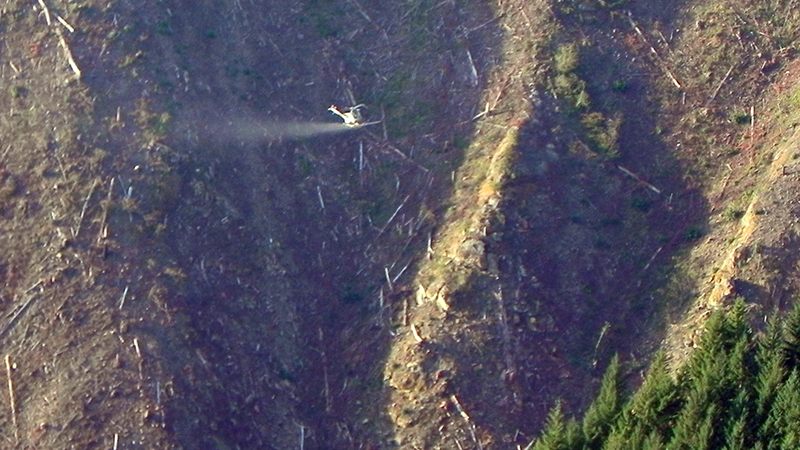
Herbicide Use in Oregon's Industrial Forests
Beyond Toxics published the first comprehensive report on herbicide applications in industrial timber plantations and state forests.
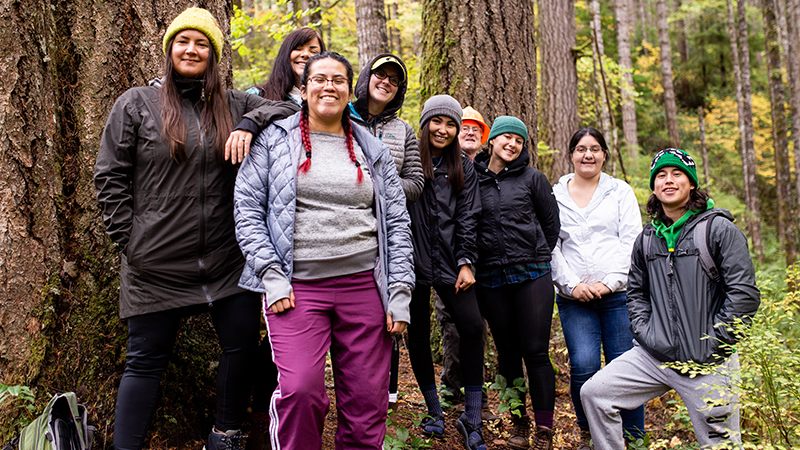
Resilient Forestry Tours
Most years we partner with small forest owners to host guided tours in biodiverse forests to learn about sustainable forestry practices here in Oregon.

Protecting Watersheds in State Forests
State forests are highly valued as wildlife habitat, protection of viable watersheds for fish and drinking water, and places to hike, camp, fish, picnic or seek peace and quiet.
What is Resilient Forestry?
Resilient forestry refers to a set of practices and principles aimed at creating and managing forest ecosystems that are better equipped to withstand and recover from environmental adversity, such as wildfires, pests, diseases and climate change. The concept of resilient forestry recognizes the dynamic nature of ecosystems and works to enhance their ability to adapt and bounce back.
Resilient forestry involves a range of practices that focus on promoting health, diversity and functionality of forests, such as:
-
Selective logging
-
Reducing vulnerability to pests and disease
-
Enhancing natural forest habitat
-
Restoring degraded areas
-
And more!
Background
In 2019 Beyond Toxics stood among ten environmental protection nonprofits collaborating closely with then-Governor Brown. Together, we achieved a groundbreaking agreement that marked the turning point in curbing aerial herbicide sprays and propelling Oregon towards a new era of riparian protections.
In October of 2021 representatives from environmental organizations and the timber industry took action to protect fish and wildlife habitat streams on over 10 million acres of forestland in Oregon by reaching a new agreement to overhaul the Oregon Forest Practices Act. Conservation and fishing groups joined timber representatives to agree on key modernizations to Oregon’s outdated forest management practices.
The parties agreed on a framework for:
-
Riparian buffers for streams, rivers, and bodies of water;
-
Steep slopes protection to minimize erosion and protect habitat;
-
An approach moving forward to improve forest roads;
-
Requirements to include Tribal participation in adopting rules and practices;
-
And a path forward to make adjustments and adaptation to forest practices in the future.
Soon after, the Governor announced this historic agreement to the world. We remain hopeful that a strong and collaborative science process will drive future changes that address the damaging effects of climate change and a warming climate.