Covanta Marion Garbage, Industrial and Medical Waste Incinerator
Covanta (Reworld Marion) Incinerator closed at the end of 2024. Now, outside interests want to bring it back.
Reworld Marion, formerly known as Covanta Marion, has ended waste incineration operations as of December 31, 2024. The international corporation stated in communications to Marion County it will turn its attention to “new business opportunities … in North America.”
The corporation’s announcement followed the passage of SB 488, a 2023 environmental health bill introduced by Sen. Deb Patterson of District 10 where the incinerator is located. The bill required regular emissions sampling and reporting of hazardous dioxins, furans, heavy metals and particulate matter pollution from the incinerator. Prior to the bill, Reworld instead conducted one annual pollution stack test.
Recent Updates
On November 5, 2025, representatives from Salem-based development agency SEDCOR attended a Marion County Board of Commissioners meeting to discuss "Project Barber Pole." After prodding by the Commissioners, they admitted that "Project Barber Pole" refers to the red-and-white striped incinerator stack at the Brooks incinerator.
Though they did not divulge many details, it's clear that an outside company—based in Texas—wants to acquire and reopen the incinerator.
This is a developing situation that Beyond Toxics is paying close attention to.
Background
Beyond Toxics and Clean Air Now first drew attention to environmental health concerns regarding waste incineration when it conducted an environmental monitoring project in 2022. Moss samples collected at various distances showed increasing quantities of heavy metals the closer the samples were taken to the incinerator.
Some heavy metals, such as lead, have no safe level of exposure. Other air pollutants like dioxin are highly persistent in the environment and are highly toxic and can cause cancer, reproductive and developmental problems, damage to the immune system, and can interfere with the body’s balance of hormones, per the U.S. EPA.


What is Covanta Marion?
Covanta Marion was Oregon’s only garbage incinerator, but Covanta is an international corporation with approximately 40 incinerators in other parts of the United States, the United Kingdom, Canada and Europe. The incinerator in Oregon, built in 1986, is one of the oldest, most out-of-date and polluting facilities. It burns an assortment of waste products to produce 13 megawatts of electricity.
Covanta is among Oregon’s most dangerous polluters. The incinerator produces highly toxic air emissions from its stacks and toxic-laden ash that is hauled away and dumped on land. The Oregon Department of Environmental Quality determined that high levels of mercury in the Willamette River are associated with the waste water that Covanta Marion discharges directly into the river.
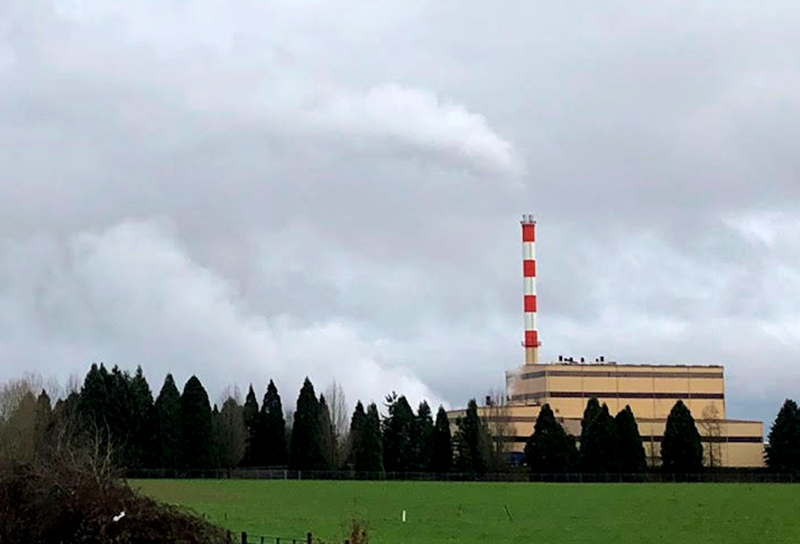
Reworld Marion, formerly Covanta Marion waste incinerator in Brooks, Oregon.
Burning More Than The City's Garbage
Covanta burned municipal garbage from Marion County. However, the facility increased their profits by importing medical waste and industrial waste from other states, sometimes as far away as Georgia. In June 2021, the Salem Statesman-Journal reported that Covanta Marion burned unexpected waste streams like body parts, vinyl plastic, toner cartridges, oily solids, HVAC filters, polyurethane foam and Styrofoam peanuts, empty hazardous waste containers and pharmaceutical waste.
These inputs, when burned, create dioxins (the hazardous contaminant in Agent Orange), heavy metals such as lead, cadmium and mercury, as well as hydrogen chloride. Covanta Marion was the 19th single largest source of greenhouse gasses in Oregon.
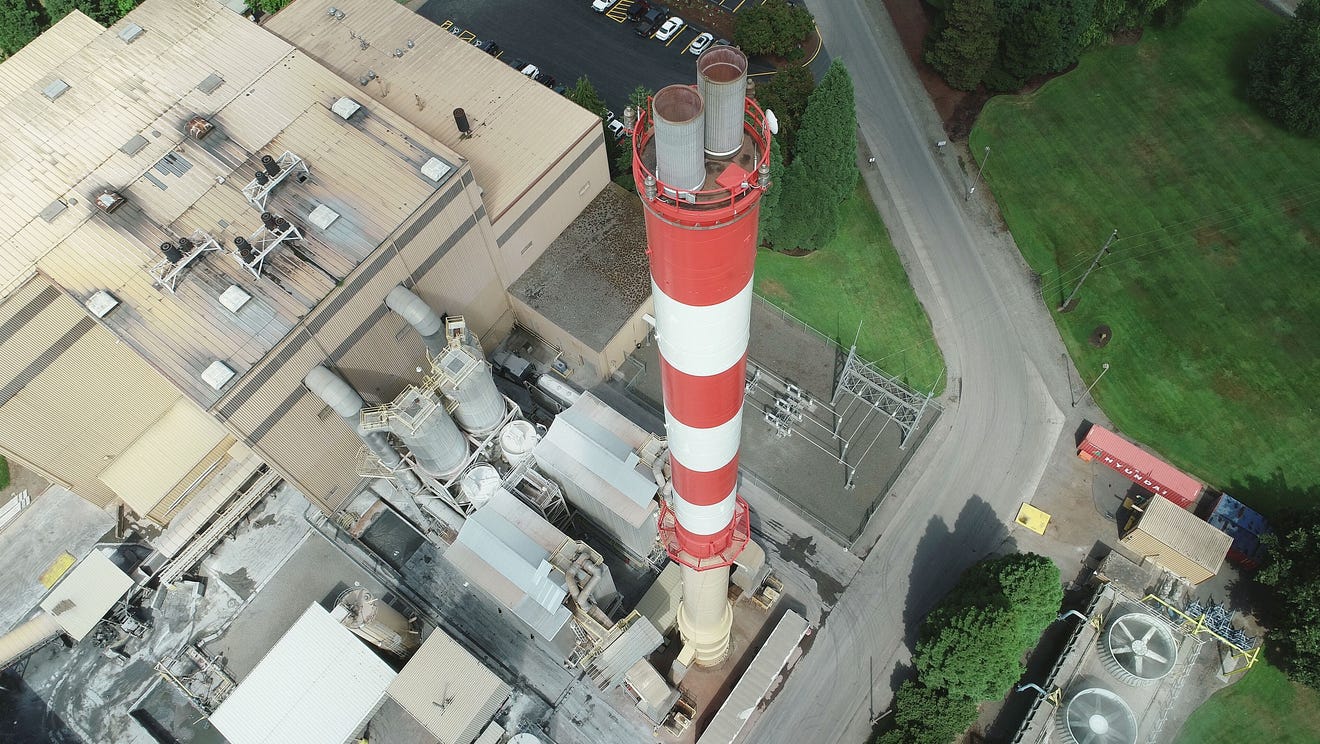
The Reworld Marion garbage incinerator stack, recently referred to in "Project Barber Pole"
Our History of Clean Air Advocacy
Covanta Marion and its pollution has been an important focus of our clean air advocacy since 2018. Currently, the facility is required to get a Title V air pollution discharge permit under the Cleaner Air Oregon regulatory program, a type of regulatory permit reserved for the largest polluters. In our role as a clean air watchdog, Beyond Toxics advocates for policies and regulations that protect downwind communities from Covanta Marion’s high level of toxic pollution and require upgrades to its outdated equipment.
First, we released the first moss study of heavy metal pollution near Covanta. Our results showed that there were higher concentrations of heavy metals in areas closest to the incinerator, which we surmise is due to fallout from the plume of air pollution emitted from the incinerator’s stacks.
Beyond Toxics played a major role to stop SB 451 in 2019, which was introduced at the request of Covanta in order to designate the incinerator as a “renewable” energy facility. This would have allowed Covanta to falsely greenwash its practice of incinerating garbage as renewable energy, profit from renewable energy tax credits, and sell the generated electricity at a higher rate.
2023 Legislative Victory
Beyond Toxics championed Oregon Senate Bill 488, sponsored by Senator Patterson and supported by several legislators, which became law after passing both chambers of the 2023 Oregon Llegislature.
This groundbreaking legislation centers around municipal solid waste incinerators, promising transparent, accurate and publicly available data on toxic emissions from waste incineration. It also places firm limits on the amount of medical waste burned at incinerators in Oregon.
Significance for Oregonians
Prior to the passage of SB 488, incinerator owners only tested for dioxins and heavy metals once a year during pre-arranged visits from the Oregon DEQ. Now Covanta Marion will be required to sample for heavy metals and other hazardous chemicals on a continuous schedule (by minute and/or by hour) and report these toxic pollutants to the public.
This victory achieves cleaner air, polluter transparency, and the adoption of the most up-to-date technology, showcasing Oregon's commitment to a healthier environment. SB 488 mandates one of the only continuous emissions monitoring projects in the United States, and provides a model for other facilities to follow in the future. The passage of this law upholds our long commitment to the principle of Toxics Right to Know—communities have a right to know what’s in the air they breathe!
Continuing the Fight for Clean Air
Oregon Senate Bill 488, passed in the 2023 legislative session, requires Covanta to submit a draft sampling plan to the Oregon DEQ by the end of 2023. Unfortunately, the plan was deemed to be inadequate by the DEQ. The test plan did not include a plan to continuously monitor or sample for PCBs, dioxins/furans, cadmium, lead, mercury, arsenic, total chromium, manganese, nickel, selenium, and zinc.
The DEQ sent Covanta a Warning Letter With Opportunity to Correct which established January 25, 2024 as the new target date for them to submit a complete plan. As of April 1, 2024, Covanta had still not submitted their legally-required sampling plan.
Recent News
Reworld to close Oregon facility, further limiting West Coast incinerator presence By Jacob Wallace, Editor, WasteDive (Oct. 16, 2024)
Brooks incinerator to end waste services. What that could mean for garbage rates by Tracy Loew, Salem Statesman Journal (Oct. 11, 2024)
US Forest Service moss study links heavy metal pollution to Brooks incinerator by Tracy Loew, Salem Statesman Journal (Nov. 13, 2024)
Oregon becomes first state to require higher standard of continuous emissions monitoring at incinerators (Aug. 3, 2023, WasteDive)